
Castle facts travel well and verify badly. The same nine or ten claims circulate on every tour, in every guidebook and on every list of curiosities, and most of them can be traced to a Victorian idea, a film, or a single writer in 1902.
What follows is each of them checked against the organisation that actually looks after the buildings, with the wording they use. Some are false. One is not merely false but backwards, and it is the most interesting thing here. Two have no traceable source in either direction, and we say so rather than pretending otherwise.
1. Boiling oil poured from the battlements
False, and English Heritage says so at some length. Hot oil was rarely used as a weapon, because oil was expensive and there were better things to throw. What defenders did sometimes pour on men climbing scaling ladders was hot sand, boiling water or quicklime.
The best line in their account is the one nobody quotes, and it quietly reverses the whole image:
It was more common to pour water to put out fires than dump unpleasant objects on attackers.
Which makes sense the moment you picture a siege honestly. The immediate threat to a castle full of timber floors, hoardings and roofs is not the ladder. It is the fire.
2. Spiral stairs turn clockwise to favour a right-handed defender
This is the most repeated castle fact in the English language and it is an invention with a name and a date attached. It appears in print in an essay by Sir Theodore Andrea Cook, an art critic, in The Monthly Review in 1902, expanded into his book Spirals in Nature and Art the following year. There is no medieval source for it.
The evidence against it is not an opinion either. A survey by Neil Guy for the Castle Studies Group, published in its journal, identified more than eighty-five anti-clockwise newel stairs in castles in England and Wales between 1070 and 1500, and the estimate reported from that work is that something like thirty per cent of surviving stairs turn the wrong way for the theory. The list of offenders is not obscure: the Tower of London, Norwich, Newark, Conwy, Caerphilly, Beaumaris, Caernarfon, Goodrich, Kenilworth, Helmsley.
Some gatehouses go further and have two stair turrets, one turning each way. The likeliest explanation there has nothing to do with swords: it is the arrangement used in monastery and cathedral towers, where one stair goes up and the other comes down so that traffic does not jam.
Worth being precise about the strength of this: the eighty-five examples and the thirty per cent come from a specialist journal we have not read directly, reported by writers who have. Treat them as a well-sourced count rather than as our own.

The real reason
Why the stair is a spiral at all
The honest answer to why castle stairs turn is duller and more convincing than the swordsman. A tower is round and a straight flight will not fit inside one. A spiral packs a lot of vertical distance into a very small footprint, it needs no landings, and the central newel post carries the load of every tread without a separate structure.
The consequence for the visitor is the wedge-shaped tread you are looking at: comfortable at the wall, almost nothing at the centre. That geometry, and not the handedness, is what makes these stairs difficult today.
3. Castles were grim and grey
This is the correction that deserves to be better known, because it is well documented and almost nobody publishes it. Cadw, which manages Conwy Castle, opens its own account of the building with a flat contradiction of the postcard:
This darkly forbidding fortress was originally white. Imagine a 13th-century visitor gazing across the River Conwy at the castle's gleaming white walls, heraldic banners, painted shutters and shields hanging from the battlements.
And it invites visitors to look for the evidence themselves: keep your eyes peeled, it says, for traces of lime render on the walls.
The render was not decoration alone. Lime plaster kept water out of the masonry, which is why it was applied and why it had to be renewed: it weathers off over decades, and a castle nobody has rendered for five hundred years is bare stone by default. The grey we photograph is not the medieval building. It is the medieval building with its skin gone.
The same is true well outside Europe. The UNESCO description of Himeji, the finest surviving seventeenth-century Japanese castle, singles out its white plastered earthen walls. Two continents, two completely unrelated building traditions, and the same answer: the castle was meant to be seen from a long way off, and white carries.
4. The moat was a defence
Here is the one that is backwards. Historic England repeats the same paragraph across the scheduling entries of hundreds of individual sites, and it says that around six thousand moated sites are known in England, that they consist of wide ditches, often or seasonally water-filled, enclosing islands of dry ground, and that most of them served as prestigious aristocratic and seigneurial residences with the moat intended as a status symbol rather than a practical military defence.
That is the national heritage body, in its statutory descriptions, saying that the moat was mainly about showing off. The peak period for building them was roughly 1250 to 1350, comfortably after the age of serious castle warfare in England.
Once you accept that, a lot of things stop being puzzling. Conwy's ditch is dry and filled with rock and earth. Plenty of moats are too shallow or too narrow to stop anyone determined. They were doing a job, and the job was to be seen doing it.
The crocodiles, incidentally, have no source in either direction, because no institution has ever felt the need to deny them.
5. You needed the king's permission to build battlements
True as a fact and false as an explanation, which is the most common shape a castle myth takes.
Licences to crenellate genuinely existed, and they have been catalogued: roughly 463 grants between 1199 and 1600, counting royal licences together with those issued by the palatinates of Durham, Cheshire and Lancashire. Edward III alone accounts for more than a hundred and fifty of them.
What they were not is a security measure. The Victorian reading, that the crown used licences to stop over-mighty lords fortifying themselves, has no evidence behind it, and the distribution shows why: most licences went to minor knights for modest manor houses, which is not who you would be worrying about. The scholarly reading is that crenellation was the architectural expression of noble rank, and that a royal licence added the cachet of official recognition. It was a status purchase, sought as eagerly as any lucrative privilege.
Notice that this is the same conclusion as the moat, reached from a completely different direction. Two independent lines of evidence say that the late medieval English castle was communicating rank at least as much as it was repelling armies.
6. Every castle had a dungeon and an oubliette
Partly false, and the part that can be documented is the part about us rather than about them. Historic Royal Palaces is direct about how the Tower of London's reputation was built:
Of all the roles that the Tower has played, torture has attracted the most myth and legend. Victorian crowds, entranced by the gothic tales and exaggerated accounts of torture and suffering, flocked to the fortress to enjoy the chill of the dungeons.
The Tower was not built to be a prison, and conditions for those held there varied enormously. Walter Raleigh, imprisoned for years, had a garden of his own and visits from his family. That is not a dungeon in any sense the word carries today.
On the oubliette specifically we have to stop short. The claim that most so-called oubliettes are really cisterns, grain stores or latrine shafts is repeated across a great many popular sources and we could not find it stated by any institution, nor could we find a count of how many are genuine. So: the Victorian appetite for dungeons is documented, and the reclassification of the pits is not. Believe the first.
7. Cross-shaped arrow slits were for crossbows
Unresolved, and worth saying so. The tidy version, that a plain vertical slit is for a bow and a cross-shaped one for a crossbow, circulates widely without a primary source behind it.
English Heritage, describing how battlements worked, puts the two weapons together rather than apart: the arrangement allowed soldiers to shoot arrows and crossbow bolts at the enemy, dropping hinged wooden shutters between the stone merlons to protect themselves while reloading.
French keeps a distinction English never had, and it is genuinely useful: meurtrière is the general word, archère is the one for a bow and arbalétrière the one for a crossbow. But the distinction is in the vocabulary, describing intent, rather than a rule you can apply to a shape in a wall.
8. Clothes were hung in the latrine because ammonia killed the fleas
No source, in a very specific and instructive way. Every telling of this story introduces it with it is thought that or they are believed to have. Nobody attributes it to a document, an excavation or a study. That grammatical tic is the signature of a claim that has been copied rather than found.
What is solid is the etymology, and it is better than the story. A garderobe is a keeper of robes, from the French, and the specialist definition is that it is properly not a latrine at all but a small room or large cupboard adjoining the chamber, used for the safekeeping of valuable clothing. The two meanings collapsed into one because in many castles the two rooms were in the same place. The clothes were there because that is what the room was for.
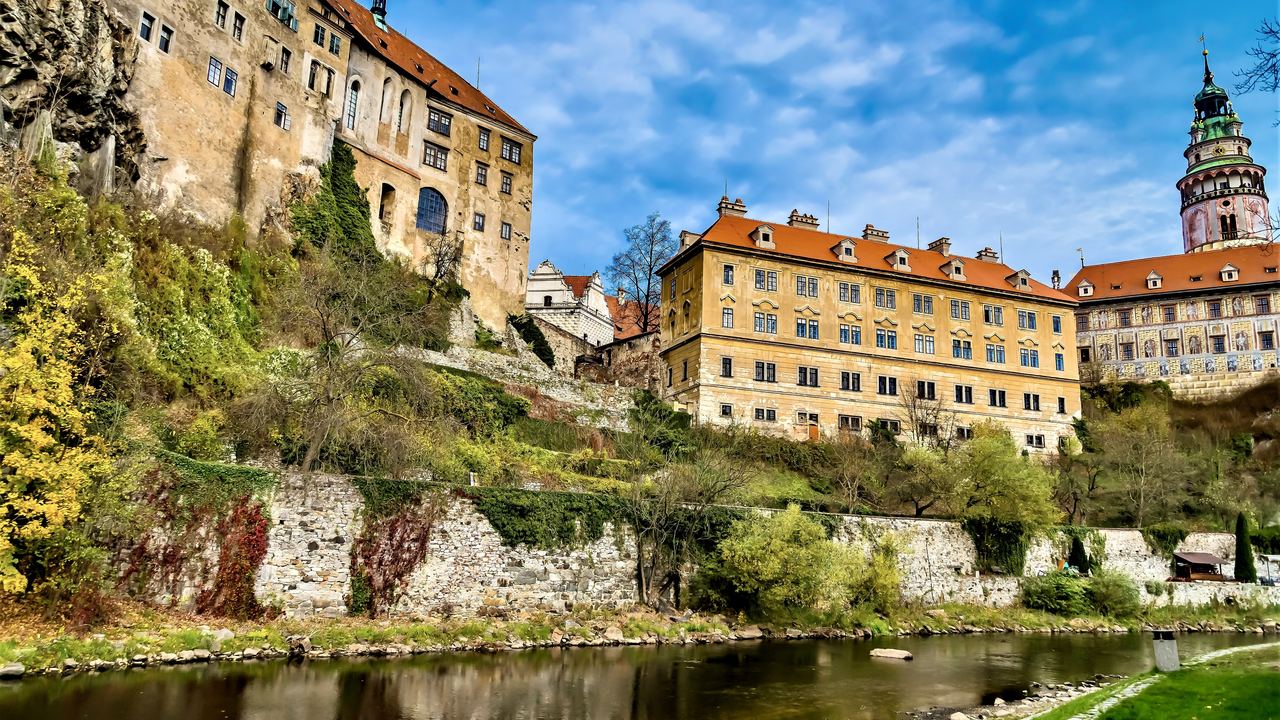
9. Prague Castle is the largest castle in the world
True with an adjective doing a great deal of work. The record held by Guinness World Records is for the largest ancient castle in the world, and it belongs to Prague Castle, at 570 metres long, an average of 128 metres across, and 7.28 hectares in all.
Malbork in Poland covers around 21 hectares, roughly three times as much, and does not hold the record because it was begun in the 1270s and falls outside the category. What the Guinness page does not do is define ancient, which is the word the whole comparison rests on. So the correct statement is that Prague holds a record with a qualifier, and that Malbork is bigger.
And while we are here: there is no Guinness record for the oldest castle in the world. Any page that cites one is citing nothing.
The short answers
Did castles really pour boiling oil on attackers?
Rarely. English Heritage says hot oil was seldom used and that hot sand, boiling water or quicklime were more usual against men on scaling ladders. Their most striking point is that pouring water to put out fires was commoner than pouring anything on anybody.
Do spiral staircases really turn clockwise to help right-handed defenders?
No. The idea was published by the art critic Theodore Andrea Cook in 1902 and has no medieval source. A survey for the Castle Studies Group found more than eighty-five anti-clockwise stairs in England and Wales, and reports that roughly thirty per cent of surviving stairs turn the other way. Stairs spiral because towers are round.
Were castles really grey?
No. Cadw states that Conwy was originally white and invites visitors to look for surviving traces of lime render on the walls. The render waterproofed the masonry and had to be renewed, which is why so little of it survives. The UNESCO description of Himeji, in Japan, singles out its white plastered walls too.
What was a moat actually for?
Status, according to the body that protects them. Historic England's standard description of the roughly six thousand moated sites in England says most were prestigious residences and that the moat was intended as a status symbol rather than a practical military defence. They peak between about 1250 and 1350.
Did you need a royal licence to build a castle?
Around 463 licences to crenellate were granted between 1199 and 1600, so they were real. What they were not is a way of controlling powerful lords: most went to minor knights for modest manor houses, and the current reading is that they were a status purchase carrying royal recognition.
What is the largest castle in the world?
Prague Castle holds the Guinness record for the largest ancient castle, at 570 metres long and 7.28 hectares. Malbork in Poland is around three times larger by area but was begun in the 1270s and falls outside the category. There is no Guinness record for the oldest castle.

Three of the corrections above have a home elsewhere on this site. The vocabulary that makes the merlon and crenel argument legible is in castle words; what the parts were actually for is in how a castle worked; and the reason so many famous castles turn out to be nineteenth-century is set out in a thousand years in twelve dates.
Data verified on. Checked against English Heritage, Cadw, Historic England, Historic Royal Palaces, UNESCO and Guinness World Records. Where no institution takes a position, this page says so instead of choosing one.