
These are the questions that keep coming back: in the follow-up questions search engines show, in the autocomplete, and above all in travel forums, where the single most frequent castle question is not about history at all. It is is my itinerary too much.
Answers here are short on purpose. Where a question deserves more than a paragraph, there is a link to the page that gives it. Nothing below is an opinion dressed as a fact: where the answer is that nobody publishes the information, that is what it says.
Before you book
Which country has the best castles?
The wrong question, and it is the fourth most common one asked. Decide what kind of day you want first. If you want furnished rooms, Austria, Britain and Portugal deliver them densely. If you want walls, views and ruins, Scotland and the Portuguese coast. If you want one great building with no travelling, Prague, Venice or Granada. See choosing a castle tour for the decision table.
How many castles can I see in a day?
Two comfortably. Three if they are all in one city, none needs a timed slot, and at least one is an exterior visit. The tour market is more conservative than that: the typical guided day trip in this catalogue names one castle, even among the eight to twelve hour ones. More in how long a castle takes.
Do I need to book in advance?
Only where entry is a timed guided tour through small rooms, which is a minority of monuments but includes some famous ones. Ruins, grounds tickets and open-admission sites essentially never sell out. Neuschwanstein is the strict case: nothing at all is sold at the castle itself.
Can you go inside every castle?
No, and this is the biggest single source of disappointment in the subject. Some famous monuments are consolidated ruins with no rooms, and some are wall walks with no interior beyond a shop and a cafe. The words to look for on the official site are ruins, remains and parapet walk. See what a ticket actually opens.
Is it worth taking a guided tour?
For a rural castle with a poor connection, usually yes: the transfer is the expensive and fragile part and a coach absorbs it. For a castle inside a city, usually not. And at several major castles the guided tour is not optional at all, in which case the only real choice is the language.
How far in advance do tickets go on sale?
It varies too much for a general rule, and very few monuments publish a release policy at all. What is reliably published is the opposite end: the daily walk-up allocation. At Neuschwanstein a limited number goes on sale at eight in the morning at the village office, for that day only.
On the day
What time should I arrive?
Fifteen minutes before the time on the ticket is the commonest published advice, and that is before security, the cloakroom and the walk from the admission point to the door. At Windsor that walk alone is about ten minutes and mostly uphill. The time on the ticket is when you must be inside.
Why does the ticket office close before the castle?
Because closing time is when the last visitor leaves, not when the last one arrives. Last admission is typically thirty to sixty minutes earlier, and at Neuschwanstein the counter shuts a full two hours before the gate. Arriving late in the afternoon can mean finding an open castle you cannot buy your way into.
What will they refuse at the door?
Large bags, mainly. Buckingham Palace refuses anything over 45 by 20 by 30 centimetres outright and has no cloakroom; the Tower of London has no bag storage of any kind and will not admit wheeled luggage. Tripods and selfie sticks are widely banned, and drones are banned everywhere we checked. Details in what to bring.
Can I take photographs?
It depends on the monument and often on the room. Buckingham Palace forbids it indoors completely; the Tower bans it in the Jewel House only; the Alhambra and Schonbrunn allow it without flash or tripod. Prague Castle sells a licence. Amateur photography at Peles is free, and only professional work is charged.
Is there anywhere to sit, and are there toilets?
Toilets and a cafe, almost always, and they are frequently the only heated rooms on a ruin site. Seating inside historic interiors is another matter: there is very little of it, and a ninety-minute visit standing on stone floors is harder than most people plan for.
Can I visit a castle in the rain?
A furnished interior, yes, and it barely matters. A ruin, a rampart circuit or anything sold on its view, not really: there is nowhere to shelter and in cloud the view is simply absent. Check which kind of castle you have booked before you check the forecast.
Getting there, and getting around
Can I reach castles without a car?
Most of them, yes, and the train is rarely the hard part. The last mile is: Sinaia station to Peles is about thirty-five minutes on foot, Karlstejn station to the gate about thirty. Four castles in this catalogue have no railway station at all. See castles you can reach by train.
How steep is the walk up?
Steeper than the map suggests, and it is rarely published. Where it is, the numbers are substantial: the approach to Neuschwanstein is about a kilometre and a half of road at a constant and sometimes steep gradient, with a footpath section running at twelve to nineteen per cent. Palazzo Pitti's entrance climbs at around twenty per cent.
Are castles wheelchair accessible?
Parts of some are. Schonbrunn has a lift and works well. Prague Castle is barrier-free except in five named towers and passages. The Tower of London calls its own access limited, and Blarney states plainly that the castle is not accessible. Full detail in stairs, slopes and who can get in.
Can I take a pushchair?
Into the grounds usually, into the interiors often not. Windsor bans pushchairs from the State Apartments, and anywhere with a spiral stair effectively rules one out whether or not there is a formal ban. Several sites lend baby carriers and few advertise it, so it is worth asking.
Can I bring a dog?
Policies vary enormously and most monuments do not publish them prominently. The safe assumption is assistance dogs only inside buildings, with grounds and parkland treated separately and sometimes more generously. This is one to check on the monument's own site for the specific day.
Is there parking?
Usually, and usually at a distance. The car park at a hill castle is often at the bottom of the hill by design, which means the walk up applies to drivers as much as to anyone arriving by bus. Parking fees are also among the recurring exclusions on guided tour listings.
Money
How much does it cost to get into a castle?
Typically fifteen to thirty euros for a famous furnished interior, less for ruins, and nothing at some. Neuschwanstein charges 21.00 euros plus a 2.50 booking fee online. The four-figure prices that dominate search results for this question are escorted multi-day packages, not admission.
Why is the tour so much more than the ticket?
Because you are buying transport and a secured slot rather than a discount. Resellers do not compete with a state palace administration on the entry fee. More in what a castle visit actually costs.
Does the tour price include the entrance fee?
Less often than you would expect. Across this catalogue roughly twice as many listings put entrance or admission fees in their exclusions as in their inclusions. Search the listing for the word admission and note which list it appears in; if it appears in neither, assume you are paying at the gate.
Do children go free?
Often for the entry and not for the booking fee, which at several sites is charged per ticket including the free ones. And there is no standard age: across the listings here the adult fare begins anywhere from twelve to eighteen, and a few charge full price from birth.
Are any castles free?
Yes. Kilchurn in Argyll has no ticket office at all. More generally the outside of almost every castle is free and needs no booking, including the paths and the bridge at Neuschwanstein and the classic view of the Alhambra from across the valley.
Is a city pass worth it?
Usually only for a longer stay, because castle days are slow and two monuments is a normal day. And a pass covers the fee rather than the slot: the Bavarian palaces card includes Neuschwanstein and still requires a separately reserved timed ticket, with nothing held back for cardholders.
About the buildings
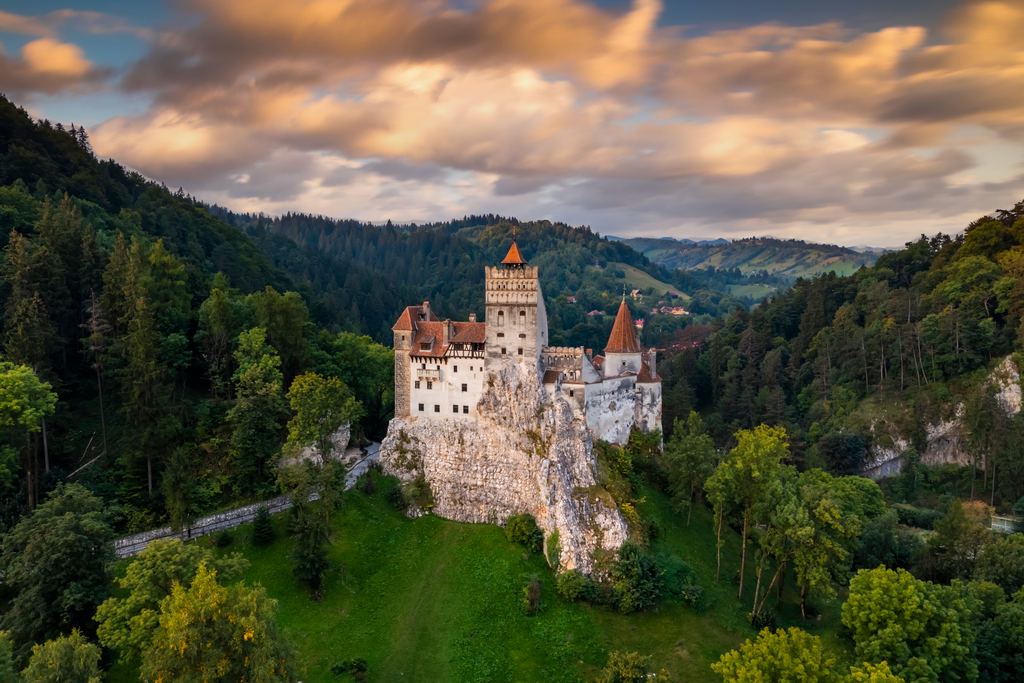
Is Bran Castle really Dracula's castle?
No, and the castle says so itself. Its own history pages state that it is often confused with the historical figure the novel drew on, and set out a quite different story: a fourteenth-century fortress that Queen Marie received in December 1920 and restored. The association is a twentieth-century one.
What is the difference between a castle and a palace?
Ownership and purpose rather than appearance. A castle is a fortified residence of a lord; a palace is an official residence of a sovereign or high dignitary. In the standard museum classification they sit on different branches entirely. See castle, palace or fortress.
Were castles really grey?
No. Cadw states that Conwy was originally white and invites visitors to look for surviving traces of lime render on its walls. The render waterproofed the stone and had to be renewed, which is why almost none survives. The same was true in Japan, where UNESCO describes Himeji's white plastered walls.
Did they pour boiling oil on attackers?
Rarely. English Heritage says hot oil was seldom used and that hot sand, boiling water or quicklime were more usual. Their best line is that pouring water to put out fires was commoner than pouring anything on anyone. More in nine things everyone believes.
Why do so many castles look alike?
Partly because the problem was the same everywhere, and partly because a great many were rebuilt in the nineteenth century by people working from the same idea of what a castle should look like. Hohenschwangau, Karlstejn and Eilean Donan all owe their present appearance to a restoration rather than to the middle ages.
What is the largest castle in the world?
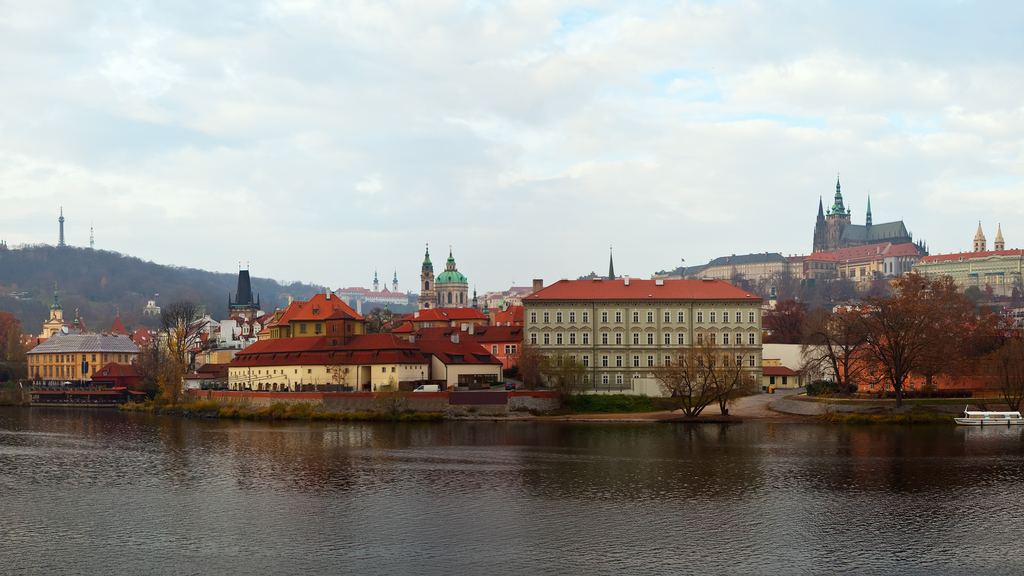
Prague Castle holds the Guinness record for the largest ancient castle, at 570 metres long and 7.28 hectares. Malbork in Poland covers around three times the area but was begun in the 1270s and falls outside the category. There is no Guinness record for the oldest castle.
The question everybody asks
Bran, and the novel it did not appear in
Bran is the most asked-about castle in this catalogue and the answer is not the one people expect, because it comes from the castle itself. Its own history pages say the fortress is often confused with the historical figure the novel drew on, and tell a different story: a fortification from the end of the fourteenth century, given to Queen Marie in December 1920, who restored and redeveloped it.
None of that makes the visit worse. It does mean that the thing being sold at the gate and the thing being sold in the town are two different products, and only one of them is what the building is.
Data verified on. Answers drawn from the official site of each monument and from the pages of this section. Where nothing is published, the answer says so rather than filling the gap.