
Type how much does it cost to visit a castle in Europe into a search engine and look at what comes back. Escorted tour packages, at three and a half thousand dollars, four thousand three hundred, six and a half thousand. Not one result in the first page answers the question a person is actually asking, which is roughly: is this a ten euro thing or a hundred euro thing?
It is, mostly, a fifteen to twenty-five euro thing. Everything else on the bill is transport, time and the fee somebody charges for arranging both. This page is about where that money goes, because once you can see the parts, you can decide which of them you want to buy.
The entry fee, and the fee on the fee
Take the most visited castle in this catalogue as the worked example, because its operator publishes everything. The Bavarian palace administration charges 21.00 euros for an adult at Neuschwanstein, twenty for a reduced ticket, and nothing at all for under-eighteens. Read on a European scale that is unremarkable: most of the famous interiors in this catalogue sit somewhere between fifteen and thirty euros, and the ruins sit below that or are free.
Then there is the second line. A booking fee of 2.50 euros is added to every ticket bought online, and here is the part worth noticing: it applies to the free tickets too. A family of two adults and three teenagers pays 42 euros of admission and 12.50 in fees, of which 7.50 is charged on tickets that cost nothing. Nothing improper is happening. It is simply not what people picture when they read that children go free.
Combined tickets follow the same logic and stack the fee. The Bavarian combinations, which add the neighbouring castle or the museum or both, carry booking fees of five euros and above, again per ticket. Combined tickets are also usually locked to the assigned date, which means a change of plan writes off the whole thing rather than one leg of it.
What the entry never covers
The list is longer than the ticket suggests, and it is remarkably consistent from country to country.
The way up. The climb from a ticket office to a castle gate is often a kilometre or more, and the shuttle bus and horse carriage that shorten it are separate private businesses with their own fares. At Neuschwanstein the administration states plainly that neither guarantees arrival in time for a booked tour, so you can pay for the shortcut and still lose the slot.
The neighbouring monument. Castles cluster, and each one belongs to somebody different. Neuschwanstein and Hohenschwangau face each other across a valley and are run by different bodies with different tickets.
A second attempt. Timed tickets are issued for a date and an hour. If you miss it, you have bought nothing.
Photography, sometimes. Rarely, and unevenly. Prague Castle sells a photography licence for the buildings where photography is not banned outright. Peles charges professional photography by the hour indoors and out, while amateur photography without flash costs nothing, which is the reverse of the rumour that circulates about it.
The general shape holds across the catalogue. The entry buys you the rooms. It does not buy you the approach, the neighbour, or a second chance.
The premium, explained
Why a reseller costs more, and what for
A listing at four or five times the state price is not necessarily a rip-off, but it is worth knowing what the difference buys. Almost never a lower price: resellers do not compete with the state on the fee, and cannot.
What they sell is availability and the road. A slot secured in advance on a day the counter may sell out by late morning. A coach from a city two hours away. A driver who knows the bus times, and someone to talk to when the connection fails. On a day when you have one chance at a monument, that is a real product with a real price.
The claim to be sceptical of is a different one. Where nothing at all is sold at the gate, there is no queue to skip, and a listing that promises to skip one is describing a product that does not exist even though the underlying booking is perfectly good.
The line to read is the exclusions
Every guided tour and day trip publishes what is included and what is not, and almost nobody reads the second list. Across this catalogue the pattern is consistent enough to be a rule.
The commonest exclusion by a wide margin is gratuities, which appears on far more listings than any other item. After it come lunch, food and drink generally, hotel pickup, and then the one that matters most: entrance fees. Roughly twice as many listings put entrance or admission fees in their exclusions as put them in their inclusions.
That single asymmetry is the most useful thing on this page. A tour priced attractively against a famous castle is frequently a transport and guiding product with the ticket left to you, and the ticket may be the part that sells out. On the inclusion side the recurring items are unglamorous and tell you what the day really is: air conditioning in the vehicle, a professional guide, private transport, bottled water. When the top of a tour's inclusion list is air conditioning, you are buying a coach journey.
The practical check takes ten seconds. Search the listing for the word admission or entrance, and note which of the two lists it appears in. If it appears in neither, assume the gate.
What a castle day costs, in parts
Adding it up honestly, for one castle outside a city, the shape looks like this. The proportions matter more than any figure, and the proportions do not change.
| Line | Typical share of the day | Notes |
|---|---|---|
| Entry to the castle | The smallest paid line, usually | Fifteen to thirty euros for a famous interior; free at many ruins |
| Booking fee | A few euros per person | Charged per ticket, including on free children's tickets |
| Getting there and back | Usually the largest line | Rail, or the whole cost of a coach day trip |
| The last mile | Small but real | Shuttle bus or carriage. Optional, and does not guarantee a slot |
| Food | Larger than you plan for | There is rarely anything near a rural castle but the castle cafe |
| The second castle | Its entry plus about two hours | The time cost is bigger than the money cost |
Two consequences follow. First, the cheapest way to see more castles is not cheaper tickets, it is fewer transfers: three monuments in one city costs a fraction of two monuments in open country. Second, on a coach day trip the entry fee is a rounding error inside the price, which is why leaving it out of the package barely lowers the headline and does raise the risk.
Where the money is genuinely well spent
Three purchases repeatedly justify themselves, and one does not.
The grounds or gardens ticket, where it exists separately, is the best value in this subject. It is cheap, it rarely sells out, it removes the time slot from the day, and at a great many monuments it is what people photograph anyway. At Sintra the most repeated piece of local advice is to buy the park ticket rather than the palace one, for exactly this reason.
The coach day trip to a rural castle earns its price when the alternative is a train, a bus and a hill. The transfer is the expensive part of these days and a coach absorbs it.
The combined rail and entry ticket, where it exists, is straightforwardly good. In this survey we found one that is genuinely a single purchase, covering the train, the shuttle and the admission at Chambord.
The purchase that rarely earns its price is the multi-site pass bought for a short stay. Castle days are slow and two monuments is a normal day, so a card priced against four or five visits usually loses to two individual tickets. And a pass covers the fee rather than the slot: the Bavarian card includes Neuschwanstein and still requires a separately reserved timed ticket, with nothing held back for cardholders.
Cost questions the search results do not answer
How much does it cost to visit a castle in Europe?
A famous furnished interior typically costs somewhere between fifteen and thirty euros. Neuschwanstein charges 21.00 euros for an adult plus a 2.50 booking fee online. Ruins are cheaper and some are free. The four-figure prices that dominate search results are escorted multi-day packages, not admission.
Why is the tour four times the price of the ticket?
Because you are mostly buying transport and a secured slot. Resellers do not compete with a state palace administration on the entry fee. What they hold is a place on a day that may sell out, and a coach from a city two hours away.
Do children really go free?
Often for the entry, and not for the booking fee. At Neuschwanstein under-eighteens pay nothing to enter and still need a ticket, and the 2.50 online fee is charged on every ticket including the free ones.
Does a guided tour include the entrance fee?
Less often than you would expect. Across this catalogue roughly twice as many listings put entrance or admission fees in their exclusions as in their inclusions. Search the listing for the word admission and see which list it is in; if it is in neither, assume you are paying at the gate.
Is a multi-site pass worth buying?
Usually only for a longer stay. Castle days are slow, so a pass priced against four or five visits rarely beats two individual tickets. And check whether it reserves anything: the Bavarian palaces card covers the Neuschwanstein fee but not the entry slot, and holds nothing back for cardholders.
What is the cheapest way to see a lot of castles?
Pick a city with several, and buy grounds tickets where they exist. The transfer between rural monuments is the expensive part of this subject, in money and in hours. Vienna, Prague, Lisbon and Florence all support three monuments in a day on public transport.
The best value in the subject
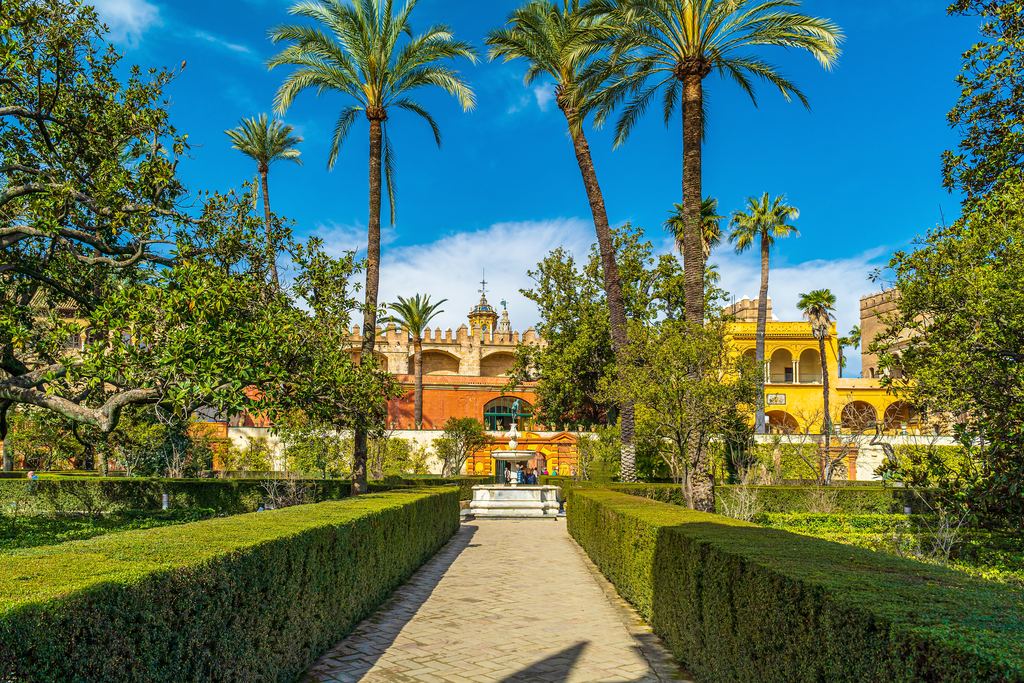
Buy the gardens
Where a monument sells its grounds separately, that ticket is almost always the shrewdest purchase on the site. It is cheap. It rarely sells out. It usually carries no time slot, which removes the one constraint that turns a day into a schedule. And at a great many places it covers the part people actually photograph.
At Sintra the most repeated piece of local advice is exactly this: buy the park ticket rather than the palace ticket, and skip the timed entry altogether. The same logic applies at any monument where the gardens are the reason the pictures exist, which includes most of the ones in this catalogue with the word palace in the name.
Two decisions upstream of the price change it more than any discount does. Whether the monument runs on timed entry, which is covered in tickets and time slots, and whether it has an interior worth paying for at all, which is the whole subject of what a ticket actually opens.
Data verified on. Official prices from the body that sets them, read on the date shown. Inclusion and exclusion patterns are described in proportions, from the listings on this site.