
Two different questions hide inside which castle tour should I book, and mixing them up is why the answers online are so unhelpful. One is about format: guided, audio, alone, or private. The other is about the monument: given a day and a region, which one.
They are worth separating, because the format question has a fairly clean answer and the monument question has a much better answer than the ranked lists that dominate search results.
Four formats, and what each is really for
These are not four points on a quality scale. They solve different problems, and the expensive one is not the best one.
| Format | What it is for | Where it falls down |
|---|---|---|
| On your own | Ruins, grounds, rampart walks, anywhere with open admission | At a castle where entry is by compulsory guided tour, it is not an option at all |
| Audio guide | Furnished interiors, going at your own pace, and any language other than the local two | No one to ask. On a fixed-route tour you still move at the group's pace |
| Joined guided tour | Compulsory-tour castles, and anywhere the building is hard to read without help | Group size and pace. You see what the guide chooses to show |
| Private tour | Fixed timetables, mobility constraints, small children, and specific interests | Runs about ninety minutes longer than the shared equivalent, which is the point but also the cost |
One structural fact settles a lot of this. At several major castles the guided tour is not optional. Neuschwanstein cannot be visited alone at all: entry is a tour of about thirty minutes through fourteen rooms at a time printed on the ticket. Where that is the case, the only real choice left is which language you will hear it in, and that turns out to be the more interesting question.
The language trap
This is buried on an operating-hours page and it is worth more than most of what is written about castle tours. At Neuschwanstein, live guides work in German and English only. Every other language, and there are seventeen of them, is handled by an audio guide: Japanese, French, Spanish, Italian, Czech, Slovenian, Russian, Polish, Mandarin, Portuguese, Hungarian, Greek, Dutch, Korean, Thai, Arabic and Hebrew.
So a booking sold as a guided tour in Italian is a booking for a device. That is not a swindle and the device is perfectly good, but it is worth knowing before paying a premium for the word guided. The pattern repeats across the catalogue: the guide languages offered on listings are heavily concentrated in English, then Spanish and French, with Italian, German and Portuguese behind them, and everything else thinning out fast. Audio coverage is broader than live coverage almost everywhere, which is exactly what you would expect once you know how the staffing works.
The practical test before booking in a language other than English: does the listing say guide or does it say audio? Both words appear in the product data and they mean different things.
How big the group really is
Shared tours in this catalogue publish a maximum group size, and the typical value is around twenty people. The commonest declared caps cluster at thirty, at fifteen and sixteen, and at eight for the small-group products, with a long tail either side.
Two cautions about that number. The first is that it is a ceiling, not an average: a tour capped at thirty may run with twelve on a Tuesday in November. The second is more entertaining. A handful of listings declare a maximum group of one thousand, which is not a promise about anything: it is what appears when the field is left empty and the system fills it. The same artefact shows up across catalogues in this industry, and it is a useful reminder that a suspiciously round number in a data field is usually a form, not a fact.
Private tours are the other half of the picture, and they are close to a third of the guided products here. They also run considerably longer: the middle private tour in this catalogue lasts about ninety minutes more than the middle shared one. That is the actual difference you are buying, more than the exclusivity. A private tour is a slower day.
The other question
If you only get one castle
The most common real-world version of this question is not about tours at all. It is somebody with one free day in a region, three candidates, and a ranked list on the internet that tells them nothing useful because it ranks by fame.
Fame is the wrong axis. The useful one is what kind of day you want, and the answer sorts itself very quickly once you know whether the castle is a furnished interior, a ruin, a reconstruction or a museum. A group that wants rooms and portraits and a ruin on a hill are not going to enjoy the same afternoon, and the disappointment is almost always a mismatch rather than a bad monument.
Choosing the monument, by what you want from the day
This is the decision table that ranked lists cannot give you, because it depends on you rather than on the castle.
| If what you want is | Look for | Where it works in this catalogue |
|---|---|---|
| Rooms, furniture and portraits | A furnished interior with state apartments | Vienna, Windsor, Sintra, Madrid |
| A view and a walk on the walls | A ruin or a rampart circuit | The Scottish Highlands, Lisbon, the Moorish castle at Sintra |
| One monument, deeply, with no travelling | A city castle reachable on foot or by tram | Prague, Venice, Florence, Granada |
| The photograph | A castle whose exterior is the famous part | Fussen, the Highlands, Transylvania |
| Several in one day | Three monuments inside one city, no timed entries | Vienna, Lisbon, Florence, Prague |
| Something nobody at home has seen | The same building type outside Europe | Beijing, where the vocabulary and the scale are different |
| A day with small children or limited mobility | Level ground, a lift, and no compulsory tour | Vienna is the clear case. Avoid hilltop ruins |
One row deserves expanding. If you want the photograph, you frequently do not need the ticket. The exterior of Neuschwanstein, the paths and the bridge cost nothing and need no booking, and the same is true of the classic views of the Alhambra from the Albaicin and of Urquhart from the shore of the loch. Deciding to skip an interior is a legitimate plan, not a failure to plan.
Where the child fare stops
A small thing that produces a disproportionate amount of unpleasantness at the door. Operators define an adult differently, and the range is wide: in this catalogue the adult band begins at eighteen on the largest group of listings, but a substantial number start it at twelve, others at thirteen, and a good many at fifteen or sixteen. A meaningful handful set it at zero, meaning everybody pays the full fare regardless of age.
So a fourteen-year-old is a child on one listing and an adult on the next, at the same castle, on the same day. There is no convention to fall back on and no way to infer it. If you are travelling with teenagers, the age bands are the one part of the listing worth reading in full before you compare prices, because two listings that look ten euros apart may not be.
So is a castle tour worth it?
It depends almost entirely on the transfer, which is the least romantic answer available and the correct one.
For a rural castle with a poor connection, a tour is usually worth it. The expensive and fragile part of that day is getting there, and a coach absorbs the connection, the bus times and the walk. Neuschwanstein, the Loire, Transylvania and the Highlands all fall here.
For a city castle, it usually is not. You are paying somebody to take you on a tram. Buy the ticket, take the audio guide if there is one, and spend the difference on time.
And check the itinerary before you decide, because a long day trip is not the same thing as a lot of castles. A twelve-hour day that names one monument is mostly a coach journey with a good view, which is a perfectly nice thing to buy as long as that is what you meant to buy.
Choosing, in the order the questions arrive
Are guided castle tours worth the money?
For a rural castle with a difficult connection, usually yes, because the transfer is the expensive part and the coach absorbs it. For a castle inside a city, usually not: you are paying for a tram ride you could take yourself. The exception is any castle where the guided tour is compulsory, and there the only real choice is the language.
Is an audio guide as good as a live guide?
Frequently it is the only option, whatever the listing says. At Neuschwanstein live guides work in German and English only and seventeen other languages are handled by audio guide. Check whether the listing says guide or audio before paying extra for the word guided.
How big will the group be?
Around twenty on a typical shared tour, with common caps at thirty, at fifteen or sixteen, and at eight for small-group products. Treat the figure as a ceiling. Ignore any listing that declares a cap of one thousand, which is what appears when the field is left blank.
What do I actually get from a private tour?
Mostly time. The middle private tour in this catalogue runs about ninety minutes longer than the middle shared one. That matters if you have small children, limited mobility, or a specific interest that a fixed route will not cover. It buys pace more than it buys privacy.
At what age does a child pay full price?
There is no standard. In this catalogue the adult band most often begins at eighteen, but plenty of listings start it at twelve, thirteen, fifteen or sixteen, and a few charge the full fare from birth. Read the age bands before comparing two prices, because they may not be comparing the same family.
Which castle should I choose if I only have one day?
Decide what kind of day you want first. Furnished rooms, a walk on the walls, one monument in depth, or the photograph. That single choice narrows a region to one or two candidates far faster than any ranked list, because the usual cause of a disappointing castle day is a mismatch rather than a bad castle.

The format nobody sells
Not booking anything is also a choice
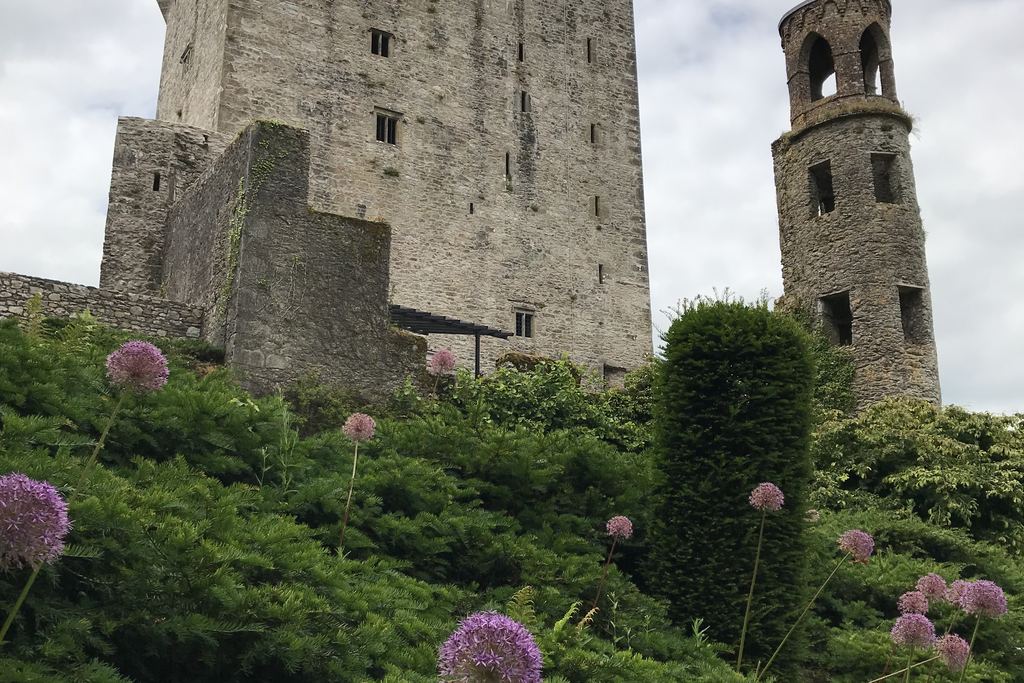
This photograph cost nothing and needed no booking. The exterior of Neuschwanstein, the paths around it and the bridge above it are free and open, and the thirty minutes people queue and pay for is the one part of the visit that cannot be photographed at all, because private photography inside is not permitted.
That asymmetry is worth naming, because it is not unique to Bavaria. The classic view of the Alhambra is from the Albaicin across the valley. Urquhart is at its best from the shore of the loch. If what you want from a castle is the sight of it, the ticket is frequently optional, and deciding that in advance is a plan rather than a failure of one.
Two pages carry the decision further. What a ticket actually opens is the one to read before choosing between two monuments, because it separates the ruins from the furnished interiors. And how long a castle takes settles whether the day has room for the second one you were considering.
Data verified on. Tour rules and languages from the body that runs each monument. Group sizes, formats and age bands are described in proportions, from the listings on this site.