
There is a moment that happens at castles and almost nowhere else in travel. You have paid, queued, climbed a hill and walked through the gate, and what is on the other side is a lawn. The walls are real, the view is enormous, and there is nothing to go into. No rooms, no furniture, no staircase up to anywhere. Nobody lied to you. The English word castle covers at least five completely different visits, and the page that sold you the ticket almost never says which one it was.
This is the page that says. It is not a ranking and nothing here is a complaint: a ruin can be the better afternoon, and often is. But the decision belongs to you before you pay, not to the guide who tells you at the gate that the interiors were lost in 1719.
The five things a castle ticket can open
These are not academic categories. Each one changes how long the visit takes, whether the ticket is worth buying at all, and whether anyone in your group with bad knees should attempt it. Every classification below comes from the body that runs the monument, in its own words, and where a body says nothing we have written that it says nothing rather than guessing.
| What you are buying | What is on the other side of the gate | Examples, in their own words |
|---|---|---|
| Furnished interior | Rooms with contents, a fixed route, usually a time slot and usually no photography | Windsor, described by the Royal Collection Trust as the oldest and largest occupied castle in the world; Schoenbrunn; Malahide; Pena |
| Consolidated ruin | Standing walls, open sky, grass. A wall walk if you are lucky. Nothing to furnish because there is no roof | Urquhart, where Historic Environment Scotland invites you to imagine the banquets; Kilchurn; Blarney, where the floor between two rooms has collapsed |
| Modern reconstruction | A complete building, only recently so. Sometimes on the medieval footprint, sometimes in a 19th-century idea of one | Eilean Donan, rebuilt between 1911 and 1932; Karlstejn, which acquired its present appearance in a purist restoration; Hohenschwangau, rebuilt 1833 to 1837 |
| Never a fortress | A romantic or ceremonial palace that looks defensive and never was. No siege, no garrison, no history of being attacked | Neuschwanstein, a building site for its owner's whole life; Pena, the high point of Portuguese Romanticism; Peles, a royal summer house |
| Museum in a historic shell | You are visiting the collection, not the residence. The rooms are gallery space | Palazzo Pitti, which is five separate museums; Belvedere; large parts of Prague Castle |

The ruin case
What a roofless castle actually gives you
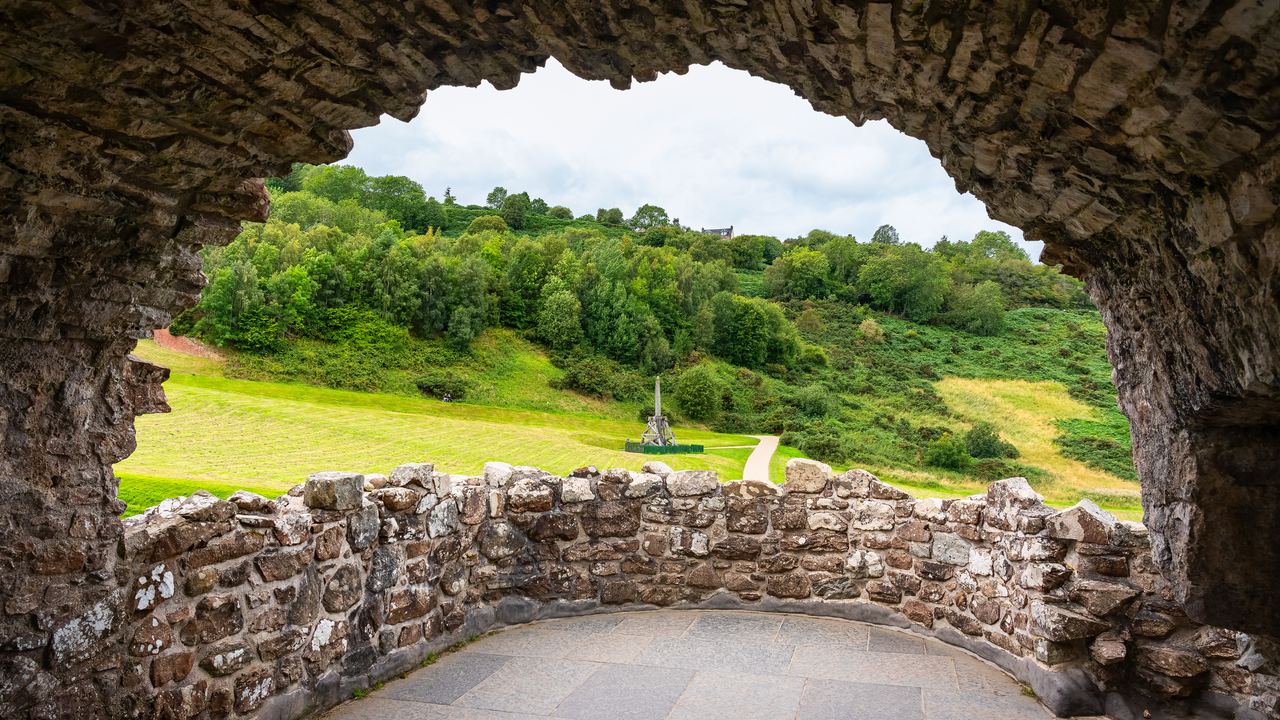
This is the view from inside Urquhart Castle, on the shore of Loch Ness. It is one of the most visited paid monuments in the Scottish Highlands and there is no interior to speak of. Historic Environment Scotland describes what remains as ruins and tells visitors to imagine the feasting in the great hall, which is an honest way of saying the great hall is a rectangle of grass.
What you get instead is the top of the Grant Tower, a prison cell to look down into, and the loch. The full-size trebuchet in the grounds is a modern replica and the site says so. None of that is a bad afternoon. It is simply a completely different one from Schoenbrunn, and it takes about half the time.
A ruin is a different visit, not a worse one
The complaint you hear at ruins is almost never about the ruin. It is about the surprise. People arrive expecting rooms, discover walls, and spend the visit adjusting instead of looking. Told in advance, the same people have a good day, because a ruin does two things a furnished palace cannot.
It lets you walk on the defences. At the Castelo dos Mouros above Sintra there is no interior at all, and Parques de Sintra is unusually clear about it: the monument is a fortification founded in the tenth century, and what it offers is a parapet walk. The only enclosed spaces on the accessible route are the shop, the cafe and the toilets. That sounds like a warning and it is really a description. You spend an hour on top of a wall in the sky above Sintra, which is not something Pena, a twenty-minute walk away, can offer at any price.
And it removes the clock. Furnished interiors run on timed entry, fixed routes and a group moving at the pace of its slowest photograph. Kilchurn, on Loch Awe, has a five-storey tower, a lower hall, a courtyard and what Historic Environment Scotland calls the oldest surviving barracks on the British mainland. It also has no ticket office. You arrive when you arrive and leave when you are done.
The building is old. The furniture is not.
This is the category nobody warns you about, and it is much larger than the ruins. A great many famous interiors are authentic buildings containing furniture that arrived later, from elsewhere, or not at all. The remarkable part is that the institutions say so plainly, in pages almost nobody reads.
Chambord is the clearest case in Europe. Its own curators write that the chateau was never designed to be permanently inhabited, and then go further:
No set of Renaissance royal furniture has come down to us, including in the institutions dedicated to that period.
What stands in the rooms today is on loan: deposits from Versailles, the Musee des Arts decoratifs, the Chateau de Blois and the Mobilier national. One table in the state apartment never left the building. Everything else is a considered reconstruction of an atmosphere, assembled by people who are open about assembling it.
Versailles is the same story at a larger scale and with a violent middle chapter. The palace was emptied after the Revolution and its contents sold over roughly a year from 1793, dispersed across some seventeen thousand lots. The recovery began in the 1930s and has never stopped: the estate still announces individual pieces coming home, one at a time, ninety years later. When you stand in a furnished room at Versailles you are looking at the results of a very long shopping list.
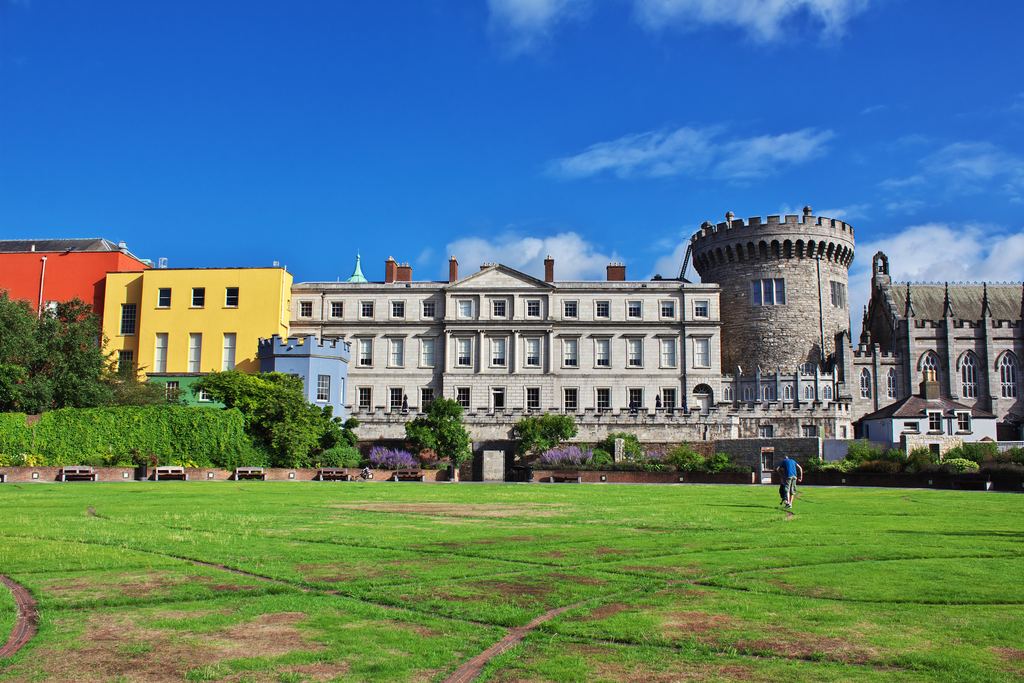
Dublin Castle offers the smallest and most instructive example. The ceiling of the Apollo Room is inscribed with the date 1746 and it is genuinely eighteenth-century work. It is also not from Dublin Castle. It was rescued from a nearby Georgian townhouse in 1912, arrived in eleven pieces, and was installed in the State Apartments during a restoration in the 1960s. The castle publishes this itself, which is more than most places do.
Rebuilt, and not always on the label
Reconstruction is not a scandal and the good ones are documented. It becomes a problem only when a visitor believes they are looking at the twelfth century and are in fact looking at 1911.
Eilean Donan is the postcard of Scotland and it spent about two hundred years as rubble. It was blown up in 1719 and lay in ruins until the Macrae family began rebuilding in 1911; the work was formally completed in July 1932. The estate is straightforward about the method: the castle was rebuilt according to the surviving ground plan of the earlier phases. The plan is medieval. Almost everything standing on it is not.
Karlstejn, an hour from Prague, went through the same process a generation earlier. Its own history page says that in the last building campaign of the late nineteenth century, led by the architect Josef Mocker in a purist spirit, the castle acquired its present appearance. That sentence is doing an enormous amount of work. Dates for the campaign circulate widely and contradict each other, and the castle itself does not publish them, so we will not either.
Hohenschwangau, in the valley below Neuschwanstein, was wrecked in the Napoleonic wars and rebuilt between 1833 and 1837 by Domenico Quaglio on the remains of the medieval castle. Here the reconstruction is the point rather than a disappointment: the interiors, with more than ninety wall paintings coordinated with the furniture, survive as a complete Romantic scheme. It is a better nineteenth-century building than it ever was a medieval one.
The castles that were never castles
Three of the most photographed buildings in this catalogue were never fortified, never besieged, and never intended to be either. That does not make them worse. It does make the arguments about them, which are constant and mostly online, easier to follow.
Neuschwanstein is the one people fight about, so it is worth using the Bavarian palace administration's own account rather than anyone's opinion. Work began in 1868 and the foundation stone was laid on 5 September 1869. Ludwig II, the administration writes, saw his new castle only ever as a building site. The rooms of the second floor remained as a shell and today hold the museum's service spaces; the tour runs through fourteen numbered rooms on the upper floors plus the historic kitchen. Two details finish the picture and neither is widely known: the masonry is brick, merely faced with pale limestone, and the throne hall is an iron structure with a skin on it.
Pena, above Sintra, is described by Parques de Sintra as the high point of Romanticism in Portugal, which is a claim about art history rather than defence. Peles, in the Carpathians, is a royal summer residence finished in an age of railways. Both are wonderful and neither has ever repelled anything.
The reverse case is worth naming too, because it is rarer and better. Cawdor, near Inverness, has a tower dated by dendrochronology to 1372 and is described by its owners as a family home. Windsor is not a museum of a castle; the Royal Collection Trust calls it the oldest and largest occupied castle in the world, and occupied is the operative word.
How to tell before you pay
Official sites give the answer away in their vocabulary, but they bury it under the ticket button. Once you know the phrases, thirty seconds on the monument's own website settles it. Resellers reproduce almost none of this, which is not a conspiracy: they are selling access, and access is the same either way.
| If the official site says | You are probably buying | What to check next |
|---|---|---|
| Ruins, remains, consolidated | A ruin. Walls and sky | Whether there is a wall walk, and whether the tower can be climbed |
| Parapet walk, ramparts, walkway | A circuit on top of the defences, no rooms | How exposed it is. This is the visit that weather cancels |
| State rooms, state apartments | A furnished route, probably timed, probably no cameras | How many rooms, and whether the upper floor is included |
| Rebuilt, restored to, present appearance dates from | A reconstruction, honestly declared | Which century you are actually visiting |
| Houses the collection, is the seat of, gallery spaces | A museum. The building is the container | Whether the historic rooms are on the route at all |
| Grounds only, gardens ticket, park entry | The outside. Often the better value, and almost never sold out | Whether the interior needs a separate timed ticket |
What the listings themselves admit
There is a second source for this, and it is the product data behind the tours on this site. Every guided tour and day trip carries a list of stops, and each stop is flagged by the operator for whether admission is included, not included, or not applicable. Read across the whole catalogue, three things fall out.
Roughly half of all stops are marked not applicable, which usually means you are looking at something from a coach or a viewpoint rather than entering it. Around one stop in eight is explicitly a drive-past with no stop at all. And close to a third of the guided tours in this catalogue do not include admission to anything, anywhere on the itinerary. That is not a scandal either, because many of those tours are honest walking tours of an old town, and their price reflects it. It becomes a problem only when the photograph on the listing is the interior.
The practical rule that follows is short. If a tour is cheap and the castle is famous, check whether the ticket is inside the price or waiting at the gate, and if the answer is not obvious from the listing, it is usually the gate.
The questions this page exists to answer
Is a ruin worth paying for?
Often, yes, and sometimes it is free. Kilchurn has no ticket office at all. What you should not do is pay a ruin price expecting a palace visit: budget about half the time, expect weather to matter far more, and check whether a tower can be climbed, because the climb is usually the best part.
Which famous castles have no interior to visit?
In this catalogue the clearest cases are the Castelo dos Mouros above Sintra, where the visit is a parapet walk and the only enclosed spaces are the shop and cafe, and the Scottish ruins: Urquhart and Kilchurn. Blarney is a ruin you climb rather than a house you tour, and the castle itself states that the floor between two of its rooms has collapsed.
Is Neuschwanstein a real castle?
It is a real building and it was never a fortress. The Bavarian palace administration writes that Ludwig II only ever saw it as a building site, that the second floor was left as a shell and now holds museum service rooms, and that the walls are brick faced with limestone. The tour covers fourteen numbered rooms and takes about half an hour.
If the furniture is on loan, is the visit fake?
No, but it changes what you are looking at. Chambord states that no set of Renaissance royal furniture survives anywhere and that its rooms are furnished with deposits from other institutions. Versailles has been buying its own contents back since the 1930s, after seventeen thousand lots were sold from 1793. Knowing that turns a room full of furniture into a room full of decisions, which is more interesting, not less.
How do I check a castle before I book?
Open the site of the body that runs it, not a reseller, and look for the words in the table above. Ruins, remains and parapet walk mean no rooms. State rooms means a furnished route. Rebuilt, or present appearance dates from, means a reconstruction. It takes half a minute and it is the single highest-value check in this whole vertical.
Does a guided tour always get me inside?
No, and this catches people out constantly. Across the tours listed on this site, close to a third include admission to nothing at all, and about one stop in eight is a drive-past. Look for the words admission or entrance fee in the inclusions rather than in the title, and if entrance fees appear under exclusions, the ticket is a separate purchase you will make at the gate.
The smallest case, and the most honest
A room that arrived in eleven pieces
The Apollo Room at Dublin Castle has a plaster ceiling inscribed with the date 1746, and it is genuinely eighteenth-century work. It is also not from Dublin Castle. The room was rescued from a nearby Georgian townhouse in 1912, arrived in eleven separate pieces, and was installed here during a restoration in the 1960s.
The castle publishes this itself, on the page that describes the State Apartments. Almost nothing else in this subject is that candid, and it is worth holding on to as the standard: authentic, and from somewhere else is a real category, and the visit is better rather than worse for knowing it.
Now go and pick one
Every destination page on this site says which of the five kinds of castle you are looking at before you book.
Data verified on. Each classification comes from the body that runs the monument, read on its own site. Where a body publishes nothing, this page says so rather than guessing.