
Castles in China to Visit
35 listings in one city, 10,483 reviews at a weighted 4.837, and two palaces whose tickets carry your passport number. Entry costs 60 CNY and 30 CNY at the gate; the median listing here is 80.12 EUR.
This catalogue tracks 35 listings in China, and every one of them starts in Beijing. What they sell is neither a queue jump nor a discount, because neither thing exists here. A ticket to the Forbidden City carries the number of the passport you will hand over at the gate, goes on sale exactly seven days before the visit at 20:00 Beijing time, and cannot be bought at the door on the day: the Palace Museum keeps no public ticket window at all. The Summer Palace, north-west of the centre, runs a different clock under a different administration. That is the shape of the Chinese problem, and it is why one of these 35 listings confirms your booking on the spot while 34 of them let you cancel for nothing.
The cheapest listing in the Chinese catalogue costs 2.63 EUR and it is not a ticket to anything. It is a tip-based walking tour with a token booking fee, one of three listings here priced under 10 EUR, and a page that advertises from 2.63 EUR has described a genre rather than a palace. Take those three out and the median is 80.12 EUR, with the first quartile at 30.65 and the third at 113.84. The top of the range is unusually low for this site: the dearest Chinese listing is 192.66 EUR and nothing at all runs past 250, where the catalogue as a whole holds 50 products above 500. There are no helicopter transfers here and no country-house lunches. Twelve of the 35 are private tours, which in Beijing means a guide and a car for the day, and most of the rest are seats on a coach.
Set that against the counter. Entry is fixed by the two administrations and it is cheap: 60 CNY at the Palace Museum from 1 April to 31 October and 40 for the rest of the year, 30 and 20 at the Summer Palace. The gap between those figures and 80 EUR is a guide, a vehicle for a full day, and the booking itself. Only the booking cannot really be handed over, because it has to be made against your own passport number, and that is the part travellers discover last.
One country, one city, two palaces. Five of these 35 listings put both of them in the same day and the rest pick one, which is the first real decision anyone makes about a week in Beijing.
Choose a destination in China

Castles Experiences in China
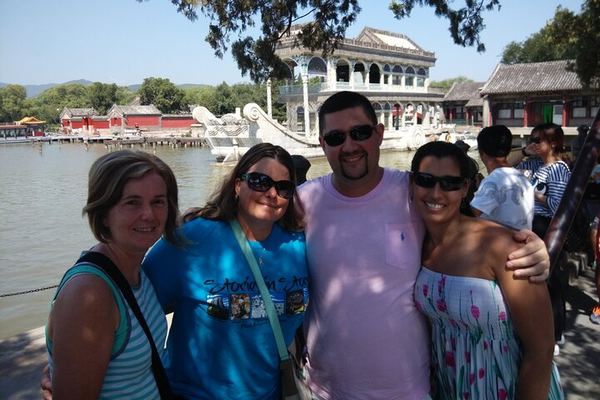
Buy the Ticket at the Gate, and Look for the Sign Saying Roy Li
No advance ticket needed here: bring your passport and cash or Alipay and buy at the gate. The guide covers the garden of 1750 that burned in 1860.
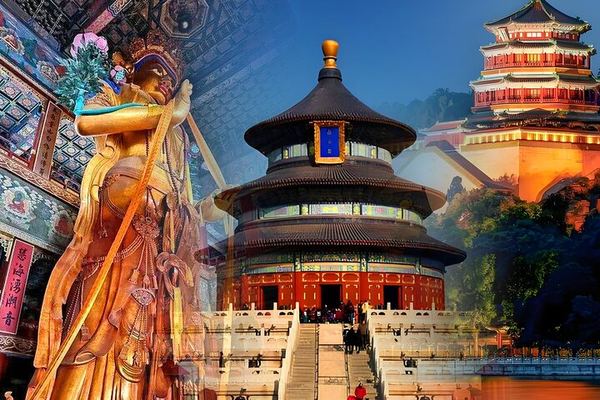
Eighteen Metres of Buddha from One Tree, and a Duck Lunch After
Two hours at the Temple of Heaven, the Lama Temple and its single-trunk Buddha, then 2.9 square kilometres of the Summer Palace, with Peking duck in between.
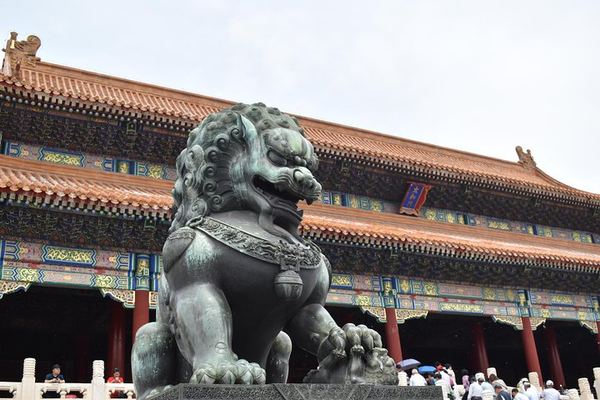
Nine Beasts on the Roof, 9,999½ Rooms, and Lions That Cannot Hear
A guide who answers the odd questions: why nine roof beasts and not eight, why 9,999½ rooms. Book seven days ahead in peak season or you queue. Sales are final.
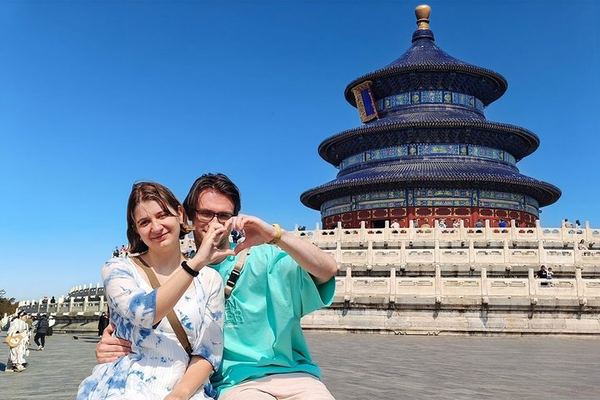
No Shopping Stops, a Rickshaw, and a Family's Courtyard to Sit In
A small group, door to door, with every fee in the price and no shopping stops at all. The hutong ride ends inside a family courtyard rather than at a gate.

Pandas at Breakfast, and Lunch Only If You Book the Full Package
Get to the Panda House early enough to watch them eat, then the Summer Palace and the hutongs. Lunch is your own unless you book the all-inclusive package.
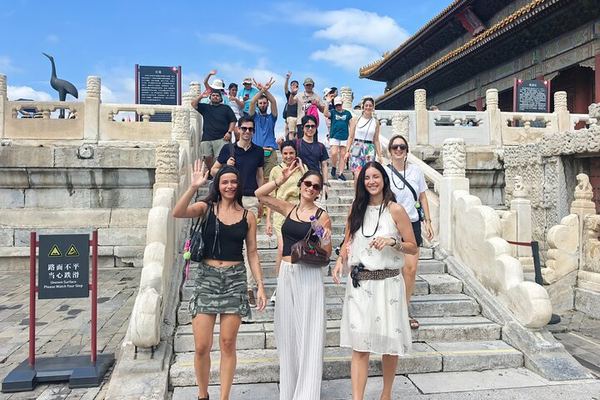
Puyi's Scottish Tutor, and the Palace That Became a Museum in 1925
Three to four hours with an English-speaking guide, taking in the last emperor, his Scottish tutor, and how the palace became a museum in 1925.
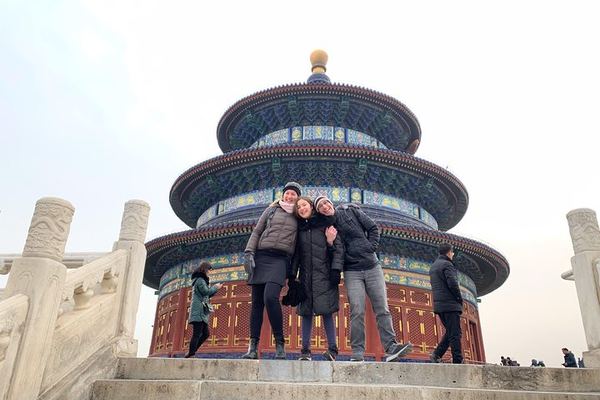
Roast Duck for Lunch, and the Hunt for the Palace's Missing Half Room
Eight hours from an 8am hotel pickup, every ticket and a Peking duck lunch included, and a guide who takes you to where the half room is supposed to be.
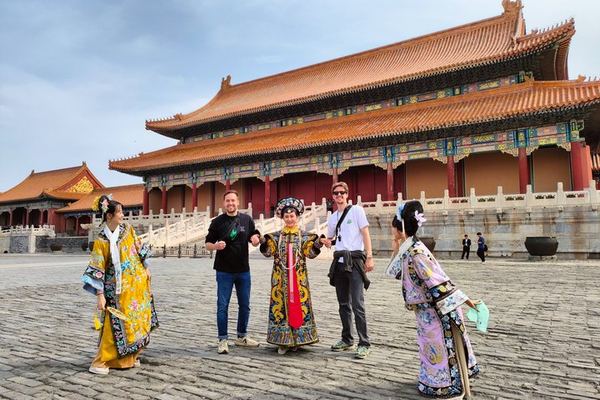
The Boat Across Kunming Lake, and Only Between April and October
Entrance fees, private car, hotel pickup and a Chinese lunch all included, and from 1 April to 30 October the day crosses Kunming Lake by boat.
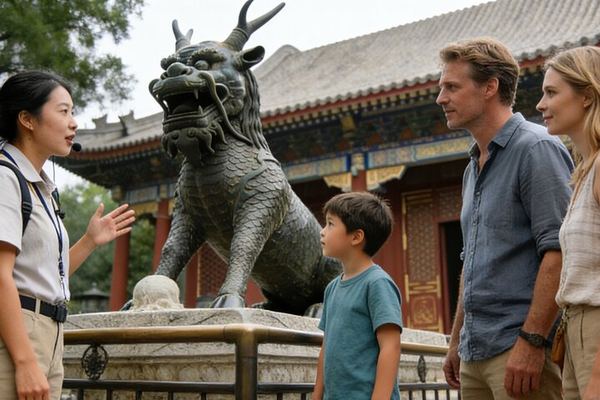
The Boat Built With the Navy's Money, and 14,000 Paintings Overhead
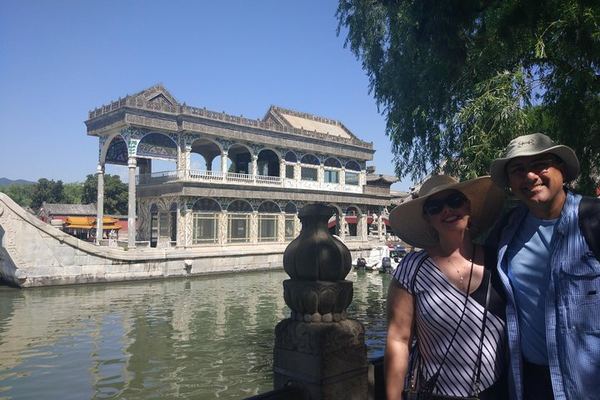
Eight packages from two hours to eight, and the walk that ends at the Marble Boat Cixi paid for with money meant for the imperial navy.
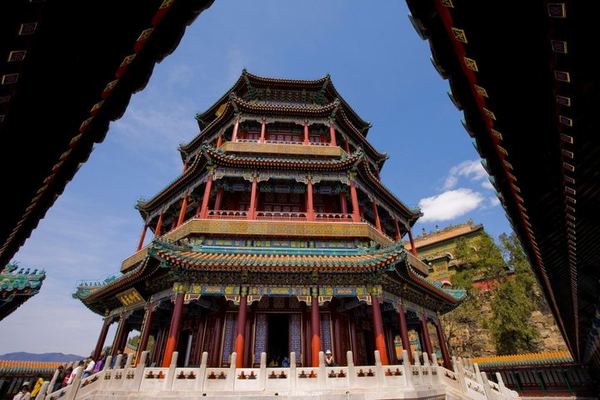
Three Hours in One Garden: the Corridor, the Island, the Tower
The Summer Palace on its own, three hours of it, morning or half past one: the longest corridor in the world, South Lake Island and the climb to the tower.
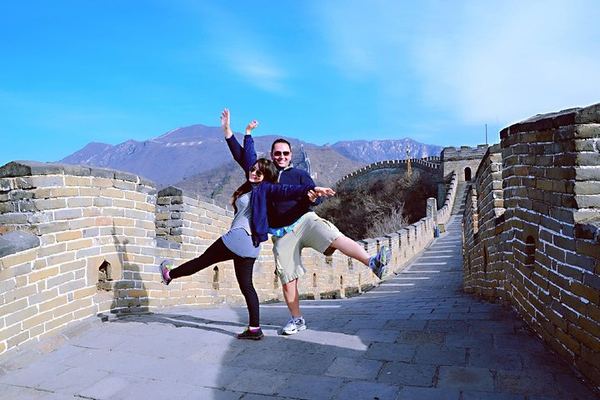
Toboggan Down From the Wall, Then Choose: the Garden or the Tomb
Mutianyu is the quieter stretch of wall, with a chairlift up and a toboggan down. The afternoon is yours to choose: the Summer Palace, or underground at Dingling.
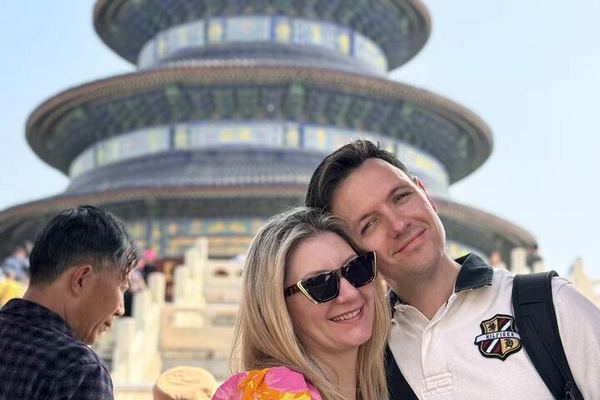
Two Heritage Sites in Half a Day, and the Card Games in the Park
Both sites in one half day, morning or afternoon, with hotel pickup. Cixi's opera house at one end, and the card and chess players in the park at the other.
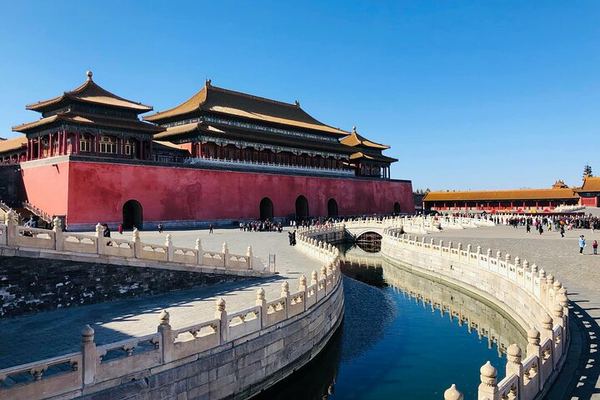
Your Passport Is the Ticket, and the Morning One Dies at Noon
Booked in advance and read from your passport at the gate, with no cash and no queue. Arrive at the East Gate; a morning ticket expires at noon.
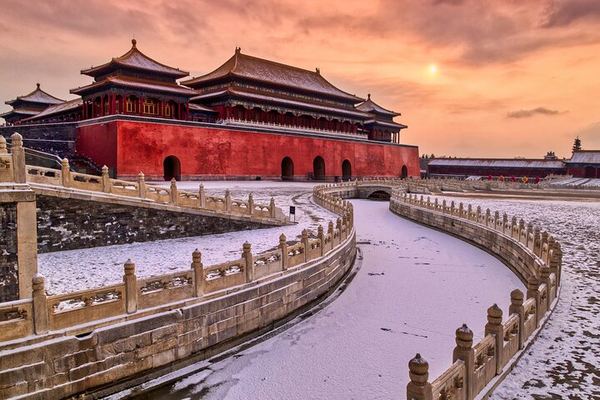
Book Seven Days Ahead or You Queue, and Only Mornings Include the Square
An agency pass gets the group into the square quickly, and four hours or more inside the palace. Book seven days ahead or the tickets cannot be pre-booked.
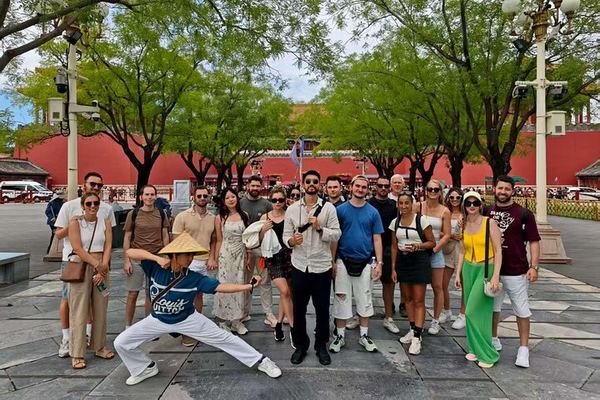
Bring the Passport, Look for the Panda Flag, and 70% of It Is Stories
Entry tickets handled, departures through the day, and a guide of fifteen years. Bring your actual passport, and know the Tiananmen queue can run to three hours.
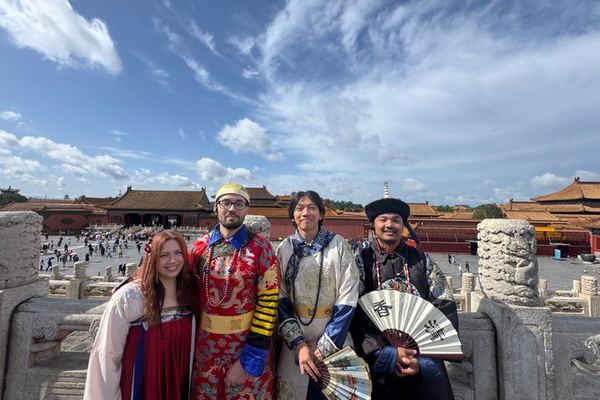
Central, East or West Route, and a Ticket-Only Option with No Tour
The palace splits into an outer court and an inner one, and you pick the central, east or west route through it. Booking the ticket alone buys no guide at all.
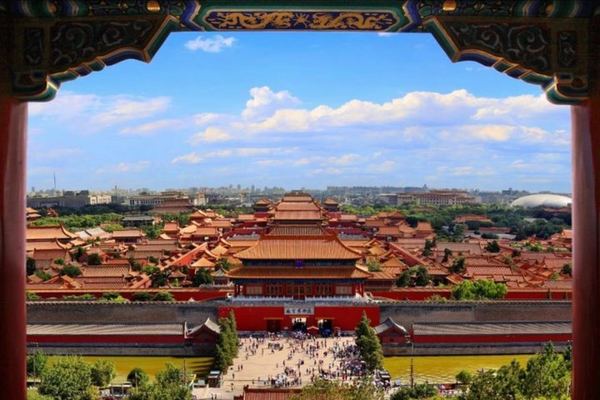
Eighteen Palaces in Four Hours, and You Make Your Own Way Back
Eighteen of the palace's courts in four hours, ticket included against the daily cap. The tour ends inside the walls: the way back to the hotel is your own.

Everything Counted in Nines, and 193 Metres of Wall That Carries a Whisper
Pandas in the morning when they move, Cixi's own rooms at the Summer Palace, and a temple where the steps and railings are counted in nines. Lunch included.
On Mondays the Lama Temple Stands In, and a Code for the Evening Square
Four UNESCO sites, all fees, lunch and a private car included, with the Lama Temple standing in on Mondays when the Forbidden City is shut.
Private Guide, Public Subway, and a 7:30 PM Deadline for the Square
A private guide who travels by metro rather than car, with all fees included. Book by 7:30 pm the night before or you get the palace but not the square.

The Bird's Nest on the Way Home, and a Boat If the Season Allows
A 7:30 start gets you to the pandas at feeding time, and the drive back passes the Bird's Nest and the Water Cube. The lake boat runs in season only.
The Budget Tier Goes by Subway, and the Morning Tai Chi Is Joinable
Three tiers: subway with fares included, private car with lunch, or both plus the Summer Palace. The Temple of Heaven comes first, before the crowds.
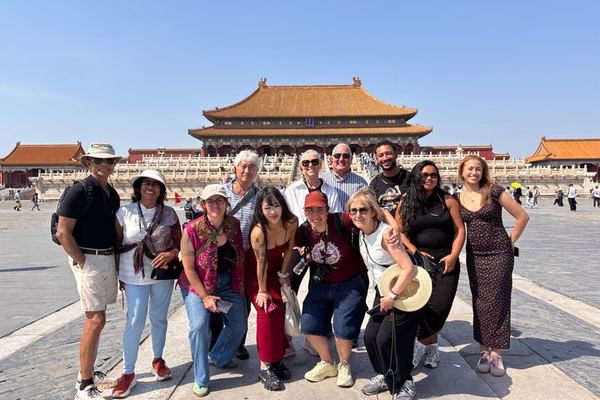
The Rostrum Where Mao Declared the Republic in 1949, Morning or Afternoon
A half day on foot, leaving at 7:40 or at one o'clock, with the palace ticket bought ahead if you book seven days out. Bring your passport for the checkpoints.
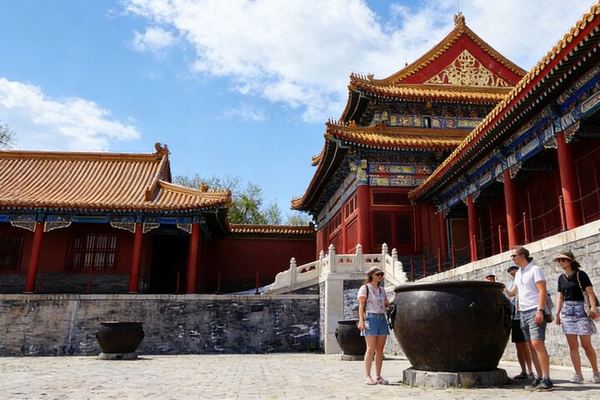
Twenty-Four Emperors, a Million Objects, and a Package for Each Kind of Day
Every package includes the admission ticket, and they range from a four-hour walk to combinations with a hutong lunch, the Temple of Heaven or the Great Wall.
Ratings collected by Viator and Tripadvisor
Who owns a palace in China
Everywhere else in this catalogue a castle has a proprietor: a state heritage agency, a royal collection, a family that still lives on the top floor. Beijing has neither model. The Forbidden City is the Palace Museum, a national cultural institution that runs its own ticketing and answers to no city department. The Summer Palace is Yiheyuan, and it is a municipal park, the first of the sixteen named on the Beijing parks card, administered by the city park management centre. They stand in the same city and share not one rule.
The proof is the only pass Beijing actually sells. The annual parks card costs 100 CNY, or 200 for the version that also works in Hebei and Tianjin, and it was on sale from 15 December 2025 to 20 October 2026. It opens the Summer Palace and fifteen other parks. It does not open the Palace Museum, because to the city the Palace Museum belongs to another category entirely, national heritage under a different authority. Anyone hunting for a Beijing version of the Paris Museum Pass is hunting for a single owner that does not exist, and we could not reach any product that bundles the two: the one domain advertising a Beijing pass did not resolve when we tried it.
| Forbidden City (Palace Museum) | Summer Palace (city parks) | |
|---|---|---|
| Adult entry, 1 April to 31 October | 60 CNY | 30 CNY simple, 60 combined |
| Adult entry, 1 November to 31 March | 40 CNY | 20 CNY simple, 50 combined |
| When tickets are released | Exactly 7 days ahead, 20:00 | 1 to 7 days ahead, released 21:00 |
| Weekly closure | Every Monday, national holidays excepted | None for the park; two paid enclosures shut Mondays |
| Buying at the gate | No public ticket window exists | Advance booking required; a counter was not confirmed |
| Beijing annual parks card, 100 CNY | Not covered | Covered, first of the 16 parks listed |
| Paying with a non-Chinese card | Official international portal takes foreign cards | No international channel found |
| Listings tracked here | 20 | 20, and 5 products sell both |
The ticket is a document, not a purchase
Everything else in China follows from one rule. A ticket to the Palace Museum is issued against an identity document, a national card for residents and a passport for everyone else, and the same document is what gets scanned at the gate. One document buys one ticket per visiting day. Nobody can be added to a group as a spare, and no agency anywhere can hold seats for clients it cannot name. Bring the physical passport as well: photographs and scans are not accepted, according to a guide that had been updated the day we read it.
Dates do not move either. A booking can be cancelled, but a new date means a new booking, and a new booking means waiting for the seven-day window to come round again, which is a real constraint on a trip whose internal order is still loose. Whether you need a visa for China at all, and on what terms, is a separate question we did not verify and one that moves too often to write down here. What we did check is the museum's own rule, and that one has been steady for years.
Each document may reserve only one ticket per visiting day.
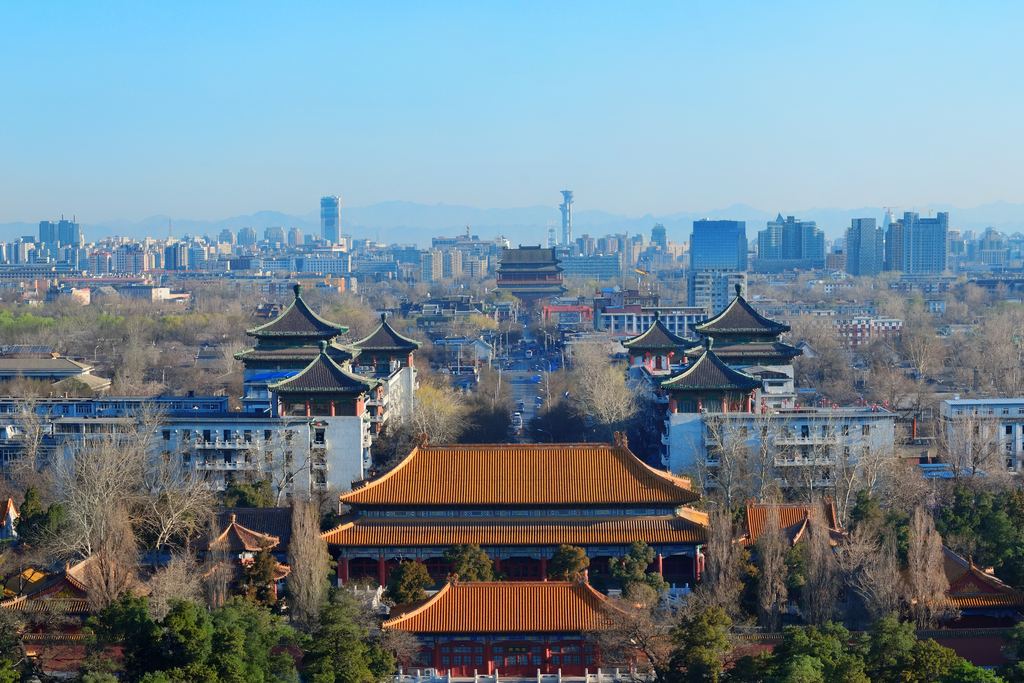
One city, and the catalogue knows it
Every listing in the Chinese section of this site departs from Beijing. Thirty-three come from Viator and two from Civitatis, twenty hang off the Forbidden City and twenty off the Summer Palace, and the arithmetic gives away the overlap: five products sell both palaces on the same day.
That concentration changes what is worth planning. There is no route between cities to build, no second region to reach, no national heritage card to buy. The whole decision is a Beijing decision: which palace gets the good half of the day, and whether the other one takes the leftovers or a day of its own.
Two dates, not four seasons
The Chinese palace year turns on two dates that have nothing to do with the weather. From 1 April to 31 October both sites charge the high-season price and keep the long timetable. From 1 November to 31 March the price drops and the gates shut earlier: the Palace Museum goes from 60 CNY to 40 and closes at 16:30 rather than 17:00, while the Summer Palace goes from 30 CNY to 20 and its park closes at 19:00 rather than 20:00. Neither administration calls this a season. It is a tariff, and it is the only calendar either of them publishes.
The administrative year in Beijing
Read from the two published tariffs rather than from a weather chart. What changes on these dates is the price and the closing time, and both are decided months in advance by the bodies that run the sites.
| Month | 1 | 2 | 3 | 4 | 5 | 6 | 7 | 8 | 9 | 10 | 11 | 12 |
|---|---|---|---|---|---|---|---|---|---|---|---|---|
| BeijingHigh season runs 1 April to 31 October: 60 CNY at the Palace Museum, 30 at the Summer Palace, park gates open until 20:00. Low season runs 1 November to 31 March: 40 and 20 CNY, park closing at 19:00, museum closing at 16:30. The Monday closure of the museum does not move with the tariff. | 1 | 2 | 3 | 4 | 5 | 6 | 7 | 8 | 9 | 10 | 11 | 12 |
Tariffs and timetables read on 2026-09-05 from the Palace Museum and from the Beijing park management centre. No month closes either site outright.
Two things ignore that calendar entirely. The Palace Museum is closed every Monday in every month, official national holidays being the only exception, and the seven-day release runs identically in February and in August. Genuine exceptions are announced one at a time on the museum's own notice page, and the only one standing when we read it was 27 July 2026, a special timetable for the second anniversary of the UNESCO listing of the Beijing Central Axis. That is the level at which this system talks to visitors. One notice, in Chinese, a few weeks ahead.
How many palaces fit in a Chinese trip
The median Chinese listing runs 240 minutes, exactly the site median, but the spread underneath is odd. Thirteen of the 35 last eight hours or more and six finish inside two, with very little in the middle. The long ones are rarely two-palace days. They are coach days that collect the Temple of Heaven, the Lama Temple, a hutong and in one case a panda house, and a palace is one stop among four.
The catalogue has an opinion about how well that works. The best rated Chinese product with real volume is an 18.92 EUR eight-hour bus tour taking in the Temple of Heaven, the Lama Temple and the Summer Palace and finishing with Peking duck: 5.0 across 645 reviews, and it never goes near the Forbidden City. The lowest rated with volume is the nine-hour classic that attempts the Forbidden City, Tiananmen Square, the Summer Palace and the Temple of Heaven in one go, at 86.70 EUR: 4.3 across 748 reviews. Two listings prove nothing on their own. They are, however, the best and the worst rated products in the whole Chinese catalogue, they differ mainly in how much they try to cram in, and the cheaper one wins by seven tenths of a point.

What this catalogue covers, and what it leaves out
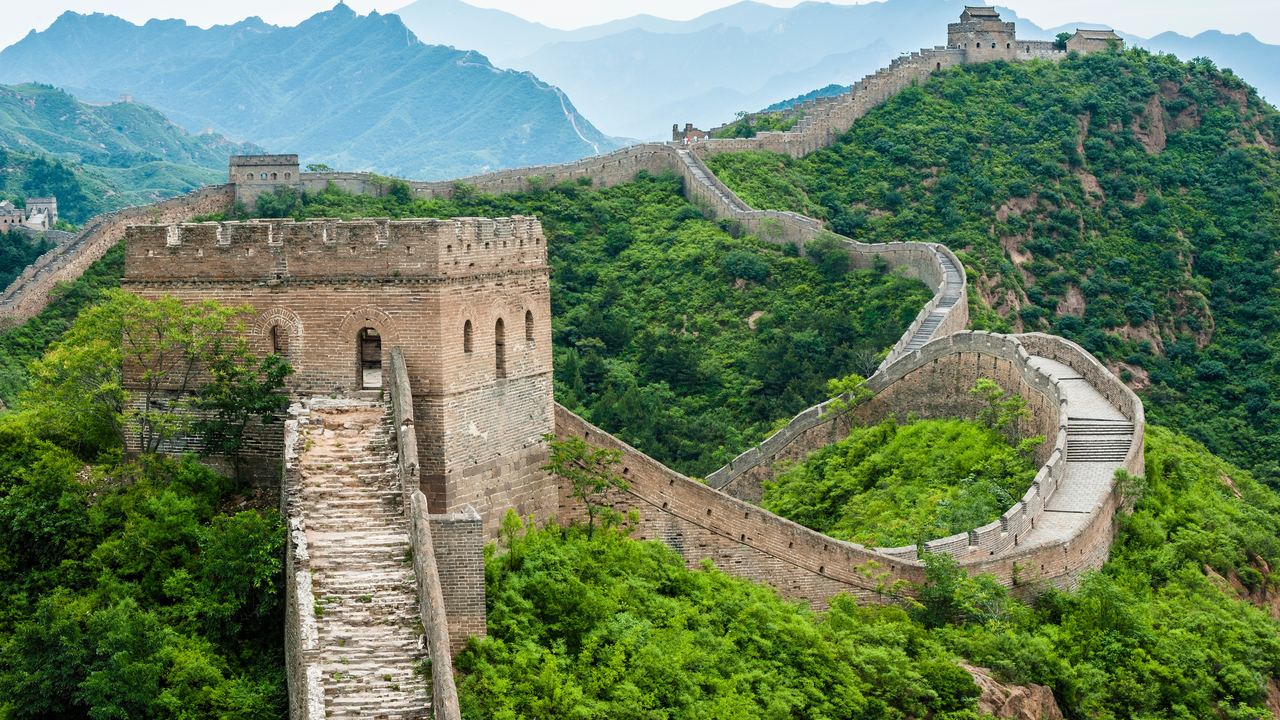
The photograph at the top of this page is the Great Wall at Jinshanling, and the Wall is not what this cluster is about. Two categories carry the Chinese catalogue, the Forbidden City and the Summer Palace, and every listing we track hangs off one of them or off both. Xi'an, Chengde, Pingyao and the Potala are not here, and neither is any part of the Wall as a product in its own right.
What is here is 35 listings from two suppliers, 33 from Viator and 2 from Civitatis, carrying 10,483 reviews at a weighted 4.837. That average is well above the 4.653 this site averages across all 560 products it tracks, and the reason is visible in the mix: no country-house day trips, no coach runs of four hours each way, short products doing one thing in a city where the transport works. Free cancellation covers 34 of the 35, which is better than the 84 per cent the catalogue manages overall. The one weak spot is confirmation speed, and it is structural rather than commercial.
What people ask before booking anything in China
How far ahead do I have to book?
For the Forbidden City, exactly seven days: the stock for a given date goes live at 20:00 Beijing time seven days before it, and there is no earlier window to get in ahead of. The Summer Palace is looser, one to seven days out, and puts new stock up each evening at 21:00. Two sites in one city, two clocks, because two different bodies wrote the rules.
Can I turn up and buy a ticket on the day?
Not at the Palace Museum. It states plainly that it does not sell same-day tickets and keeps no public counter, so a walk-up visit is impossible in any season, including a quiet Tuesday in January. The Summer Palace also requires booking ahead, and whether a walk-up counter survives there is something no source we reached would state.
Does the passport really matter that much?
Yes. One document reserves one ticket per visiting day at the Palace Museum, and the document you booked with is scanned at the gate. A photograph of the passport on a phone is not enough. An order may hold several people, indicatively up to five, but every one of them needs their own passport number in the booking.
Is there a pass that covers both palaces?
No, and the reason is administrative rather than commercial. The Beijing annual parks card opens the Summer Palace as the first of its sixteen parks and does not open the Palace Museum, which the city does not classify as a park at all. We could reach no product of any kind that bundles the two, and the one domain advertising a Beijing pass did not resolve when we tried it.
What does entry actually cost?
At the gate, 60 CNY at the Palace Museum in high season and 40 in low, 30 and 20 at the Summer Palace, with a combined Summer Palace ticket at 60 and 50. In this catalogue the median listing is 80.12 EUR once the three tipped walking tours are removed. Both numbers are true and they measure different things.
Why does almost nothing here confirm immediately?
Because the seller cannot confirm a booking it has not yet secured in your name. One listing of 35 confirms instantly, against 76 of the 560 products this site tracks. Not one Chinese listing declares skip-the-line either, and that is honest rather than a gap: with no counter and no walk-up queue, there is nothing to skip.
Data verified on. Catalogue figures from the 35 Chinese listings tracked on this site. Prices, release times and closures from the Palace Museum and the Beijing municipal park management centre.