Castles · Tour
A Late Afternoon Read of Florence, Every Stop from the Street
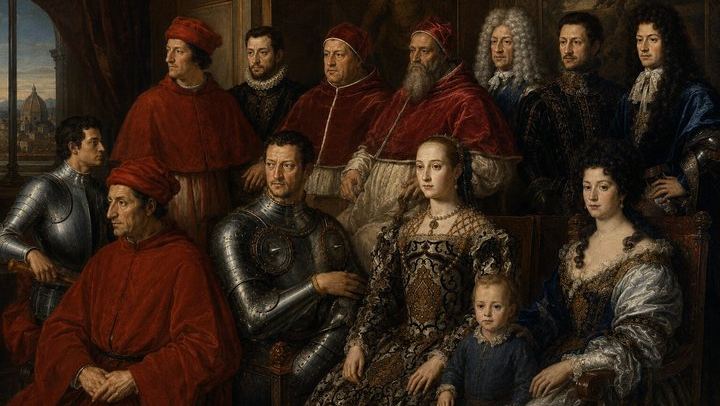
To read Florence, start with the Medici. This one runs in the late afternoon, after the museums and the queues, when the heat has dropped and the city outside the ticket offices becomes the thing worth looking at. What it gives you is closer to a licence than a tour: how to read the city through its symbols, its coats of arms, its architecture and the details most people walk past without registering. The Medici are the way in. One family, and what it did to a city through art, patronage, political calculation and money. The route follows streets used by the noble houses, by the rulers, and by Giotto, Leonardo, Michelangelo, Raphael and Brunelleschi. Every stop is explained from the outside, which is the point: no tickets, no interiors, no queueing, and by the end the streets themselves are legible.
What's included
- Fornitura di auricolari per seguire la guida senza disturbi
- Tour guidato a piedi nel centro storico di Firenze con guida turistica abilitata
- Racconto di aneddoti e chiavi di lettura storica/architettonica
Itinerary
The map could not be loaded. Please try again in a moment.
Via Camillo Cavour, 3, Firenze
The meeting point is in front of the Palazzo Medici Riccardi, Via Cavour 3, Florence. The guide is recognisable by the tulip they are holding and by their official badge. Arrive at least 15 minutes before the start.
Palazzo Medici Riccardi
You meet the guide at the Palazzo Medici Riccardi, and the tour opens with the palace from the outside. Michelozzo designed it for Cosimo the Elder, and it became the prototype for Renaissance palace architecture, which makes it the right place to start the Medici story.
Costo extra
Basilica di San Lorenzo
In front of the Basilica of San Lorenzo, the guide covers, from the exterior, the building most closely tied to the Medici: their relationship with the church and the money they put into it. The Chapel of the Princes and the New Sacristy, designed by Michelangelo, get told as what they are: power, devotion and dynastic self-promotion in the same building.
Costo extra
Complesso di San Firenze
In Piazza del Duomo the guide explains, from the outside, one of the main religious sites of the city, and how it fits the wider spiritual centre formed by the cathedral and the Baptistery. The Medici role in financing and completing the cathedral is part of it, along with Brunelleschi's dome as a statement of engineering, power and Renaissance ambition.
Costo extra
Piazza della Repubblica
In Piazza della Repubblica you find where Roman Florence began, the original centre of the city, and how it changed over the centuries up to the 19th-century rebuilding that gave it its present monumental appearance. This square has always been central to the political, social and urban life of the city.
Church and Museum of Orsanmichele
In front of the Church of Orsanmichele, the guide explains this building from the outside: a symbol of the Florentine guilds, where art and craft met. Through the tabernacles and the statues made by the leading Renaissance artists, you see how the Arti, the old guilds, displayed their standing and their money while paying for the artistic development of the city.
Costo extra
Piazza della Signoria
In Piazza della Signoria you are standing in the political centre of Florence, an open-air museum where the guide covers, from the outside, the power, the intrigue and the propaganda that ran through the city's history. Between the Palazzo Vecchio and the sculptures of the Loggia dei Lanzi, this square was the stage on which power was publicly asserted, and the Medici used it as such.
Costo extra
Uffizi
In front of the Uffizi, the guide explains, from the outside, how Cosimo I de' Medici commissioned this building to hold the administrative offices and the business of the Florentine guilds. Over time it turned from a political and administrative centre into one of the most important museums in the world, which is the Medici pattern in a single building: power, art and the running of a city, in the same walls.
Corridoio Vasariano
In front of the Vasari Corridor, the guide describes, from the outside, the raised passage Cosimo I de' Medici commissioned from Giorgio Vasari to connect the Palazzo Vecchio to the Palazzo Pitti. It let the family cross the city above the heads of everyone in it, which is as clear a statement of political control, and of the distance between the rulers and the ruled, as anything else in Florence.
Costo extra
Ponte Vecchio
On the Ponte Vecchio the guide covers, from the outside, one of the emblems of Florence and its suspended workshops. The Medici had the butchers who had always traded here replaced by goldsmiths and jewellers, which made the bridge cleaner and more controllable, and which had a good deal to do with the Vasari Corridor running directly overhead.
Palazzo Pitti
In front of the Palazzo Pitti, the guide describes, from the outside, the residence the Medici took as their official home at the height of their power. Originally owned by the Pitti family, it became the statement of Medici wealth and authority, and the physical marker of their move from influential bankers to the rulers of the city.
Costo extra
Piazza de' Pitti, 1, Firenze
Not included
- Biglietti d’ingresso a musei, chiese o monumenti (il tour è solo esterno)
- Cibo e bevande
- Mance
- Spese personali
Show 1 moreShow less
- Trasporti (il tour è interamente a piedi)
Good to know
- Infants and small children can ride in a pram or stroller
- Service animals allowed
- Public transportation options are available nearby
- Not recommended for travelers with poor cardiovascular health
Show 4 moreShow less
- Suitable for all physical fitness levels
- Up to 8 travelers per booking.
- Mobile or paper ticket accepted
- Guiding available in: ar, en, it.
Reviews
Loading reviews…