Castles · Tour
Paris and Versailles in Seven Hours by Vintage Sidecar, Two Passengers
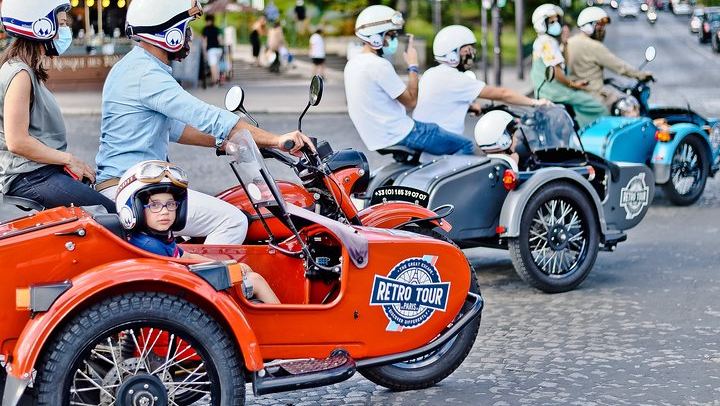
Seven hours across Paris and out of it, on a genuine vintage sidecar. The vehicle carries two passengers: one sits in the chair, one rides behind the pilot, and the two can swap during the day. The route is built to order. Nothing here is a fixed circuit, so a day can take in Versailles, or Giverny, or stay inside the city and go deep instead of wide. What the sidecar changes is not the list of monuments but the way you arrive at them: at street level, in the open air, at the speed of the traffic rather than above it, which is how the city was designed to be seen. The pilots are what the operator calls Gentlemen Siders, and they talk as they drive. The material runs to anecdotes and improbable local legends rather than a monument-by-monument commentary. The day starts in front of the church of Saint-Germain-des-Prés, and everything after that is agreed with the pilot.
What's included
- Hotel Pick Up & Drop Off
- Gloves and Goggles (if necessary)
- Professional Driver
- Local Guide
Show 1 moreShow less
- Use of Helmet
Itinerary
The map could not be loaded. Please try again in a moment.
3 Pl. Saint-Germain des Prés, Paris
In front of the church of Saint-Germain-des-Prés, 3 Pl. Saint-Germain des Prés, 75006. Two passengers per vehicle: one in the sidecar, one behind the pilot. You can swap during the day.
Louvre Museum
The largest art museum in the world and a historic monument in its own right, on the Right Bank of the Seine and at the centre of the city.
Costo extra
Place Vendome
Where the rue de la Paix begins. The square is a rectangle, but the pedimented screens cut across its corners make it read as an octagon. The column at its centre was raised by Napoleon I for the victory at Austerlitz.
Costo extra
Domaine National du Palais-Royal
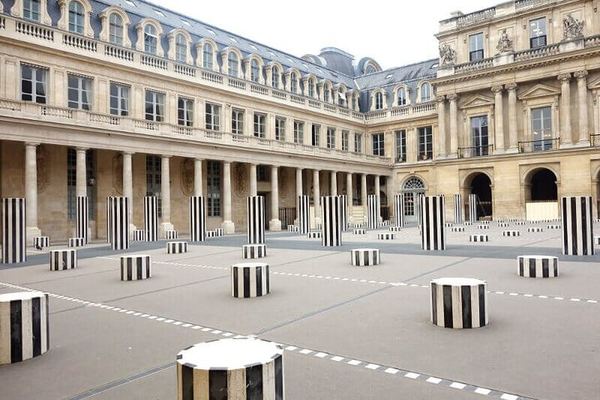
The Palais-Royal, built as the Palais-Cardinal, in the 1st arrondissement. Its screened entrance court faces the Place du Palais-Royal, across from the Louvre. In 1830 the Cour d'Honneur was closed off to the north by the Galerie d'Orléans, probably the most famous covered arcade Paris ever had. It came down in the 1930s, but its two rows of columns still stand between the courtyard and the gardens.
Costo extra
Galerie Vivienne
One of the covered passages of Paris, set between the Palais-Royal, the Bourse and the Grands Boulevards. It did very well for itself until the end of the Second Empire.
Palais Garnier
A stop in front of the Palais Garnier, a 1,979-seat opera house built between 1861 and 1875 for the Paris Opera. It was the Salle des Capucines at first, after the boulevard it stands on, and became the Palais Garnier for its opulence and for its architect, Charles Garnier. Photo stop.
Costo extra
Moulin Rouge
The can-can began here as a suggestive dance performed by the courtesans who worked the site, then became a revue in its own right and set off the cabarets across Europe.
Le Mur des Je t'aime
Frédéric Baron started with his brother, then asked his foreign neighbours, and collected the words for 'I love you' in over 300 languages and dialects.
La Maison de Dalida
Rue des Orchamps climbs from the Rue Lepic, opposite the Moulin de la Galette. Tourists do not come up here. It is quiet, and all of Paris is laid out below the house, with the sails of the Moulin Rouge cutting the sky.
Costo extra
Place Du Tertre
The artists set up their easels here every day for the tourists, which is what is left of the years when Montmartre was the centre of modern art. Worth a short walk in the narrow streets around it for the sense of the village.
Basilique Du Sacre-Coeur De Montmartre
The basilica is dedicated to the Sacred Heart of Jesus and is the second most visited monument in Paris. Walk inside for the architecture and the pictures.
Montmartre
Riding through the village of Montmartre, the most romantic quarter in Paris.
Arc de Triomphe
One of the most famous monuments in the city, at the western end of the Champs-Élysées, at the centre of Place Charles de Gaulle, once Place de l'Étoile. The Arc de Triomphe honours those who fought and died for France in the Revolutionary and Napoleonic Wars, with every French victory and general cut into its surfaces. The Tomb of the Unknown Soldier from the First World War lies under its vault.
Eiffel Tower
The most recognisable monument in Paris, with the architecture and the history explained. Photo stop and a walk around it for the view.
Costo extra
Pont des Invalides
Les Invalides, formally the Hôtel national des Invalides, in the 7th arrondissement: a set of buildings holding museums and monuments, all of them tied to the military history of France.
Costo extra
Place Furstenburg
Passing the smallest roundabout in Paris, in the quarter of artists and writers, then along the streets of the Latin Quarter.
Pantheon
The Panthéon, in the Latin Quarter. It went up as a church for St Genevieve and the reliquary holding her remains, and after several changes of mind it is now a secular mausoleum for distinguished French citizens.
Costo extra
Arenes de Lutece
With the Thermes de Cluny, the most important Roman remains left in Paris, known in antiquity as Lutetia. Built in the 1st century AD, the theatre held 15,000 people and doubled as an amphitheatre for gladiatorial combat.
Le Marais
Le Marais, in parts of the 3rd and 4th arrondissements on the Right Bank. The aristocratic quarter of Paris for centuries, with the buildings to prove it, and now the district everyone shops in, along the Rue des Francs-Bourgeois and the Rue des Rosiers.
Place des Vosges
The most famous square in Paris, with the Victor Hugo house on it.
Ile Saint-Louis
One of the two natural islands in the Seine inside Paris. Four bridges tie the Île Saint-Louis to the two banks, and the Pont Saint-Louis links it to the Île de la Cité. It was once used to graze market cattle and to stock timber.
Ile de la Cite
The other natural island in the Seine, and the centre of the city: the medieval town was refounded here. Notre-Dame stands on it.
Cathedrale Notre-Dame de Paris
Notre-Dame de Paris, Our Lady of Paris, the medieval Catholic cathedral on the Île de la Cité in the fourth arrondissement, and one of the finest pieces of French Gothic architecture anywhere.
Palace of Versailles
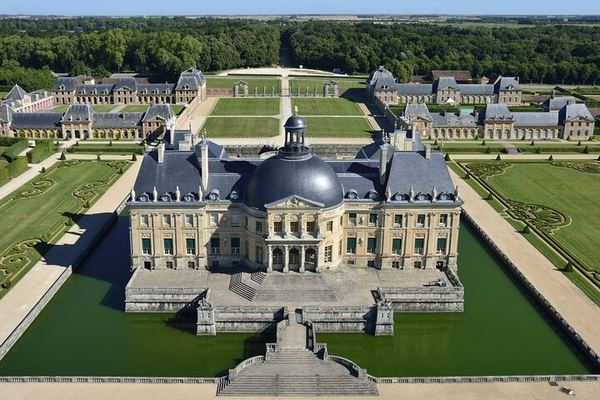
A Monument historique and a UNESCO World Heritage site: the Hall of Mirrors, the Royal Opera, the royal apartments, the smaller residences of the Grand Trianon and Petit Trianon in the park, the rustic Hameau built for Marie Antoinette, and the gardens laid out by André Le Nôtre with their fountains, canals, flower beds and groves.
Costo extra
3 Pl. Saint-Germain des Prés, Paris
Not included
- Entrance Ticket to the Palace of Versailles
Good to know
- Wheelchair accessible
- Service animals allowed
- Public transportation options are available nearby
- Suitable for all physical fitness levels
Show 3 moreShow less
- Up to 8 travelers per booking.
- Mobile or paper ticket accepted
- Guiding available in: en, fr.
Reviews
Loading reviews…