Castles · Tour
Alhambra with an Official Guide: the Partal and the Architect's Garden
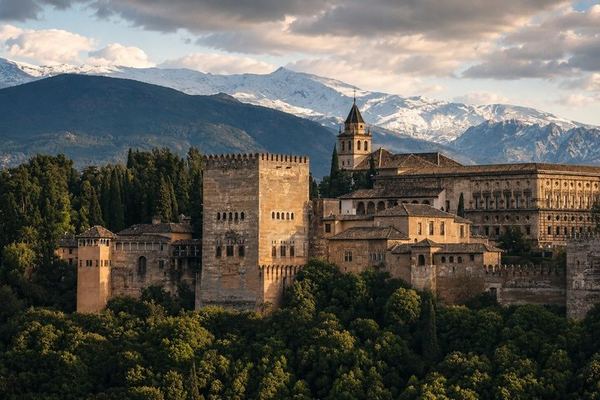
Guaranteed skip-the-line access to the Nasrid Palaces, the Alcazaba, the Palace of Charles V and the Generalife with its gardens, walked with an official guide. Official is the operative word at the Alhambra. Guiding inside the monument is licensed, and the difference shows in what gets explained: not just what a room is called, but what the Arabic name means and why the building sits where it does. The hill is called Sabika, the walls are red because of the clay they were built from, and Al-Hamra means exactly that. The route also reaches the Partal, which many visits skip. It is the oldest surviving palace area on the site, and the gardens around it hold the traces of the houses the Nasrid nobility built next door to their sultan. The Generalife closes it: gardens, orchards and a summer palace that a court poet called the royal house of happiness, which is a fair description of a building designed for a king with nothing to do. The site went on the UNESCO list in 1984 and is one of the most visited monuments in Spain.
What's included
- Professional guide
- Guaranteed to skip the long lines to get the tickets
- Alhambra and Nazaries Palaces Admission Ticket
- Map of the city
Itinerary
The map could not be loaded. Please try again in a moment.
P.º de la Sabica, 32, Granada
The My Top Tour ticket office is next to the Hotel Guadalupe. Arrive 15 minutes early.
Tour Departure Point
Departure point: My Top Tour ticket office, Paseo de la Sabica 32, next to the Hotel Guadalupe.
The Alhambra
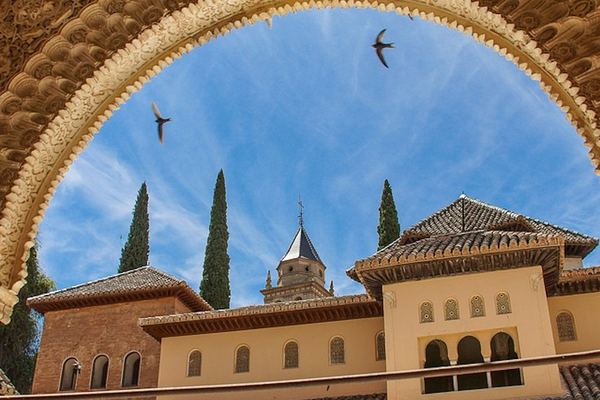
The Alhambra stands on the Sabika hill and is an Andalusi palace city. The name comes from the red of its walls, the colour of the clay they were built from: Al-Hamra in Arabic. It is a set of palaces, gardens and fortifications forming a citadel inside Granada itself, built to house the monarch and the court of the Nasrid Kingdom. Christian buildings stand among them, including the palace of Charles V and the church of Santa Maria, which was put up on the site of the old mosque. It is one of the most visited monuments in Spain and went on the World Heritage list in 1984. The visit is made with an official guide.
Alcazaba
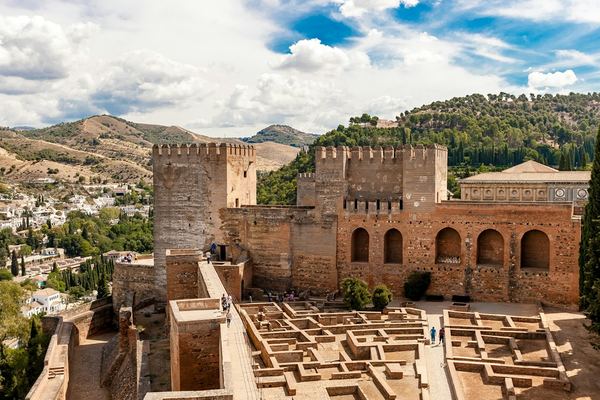
The Alcazaba is the oldest part of the Alhambra. The word comes from the Arabic al-qasbah, citadel: a walled enclosure that was a small town in itself. It housed Mohamed I while the palaces were being finished, and after that its purpose was purely military.
Nasrid Palaces
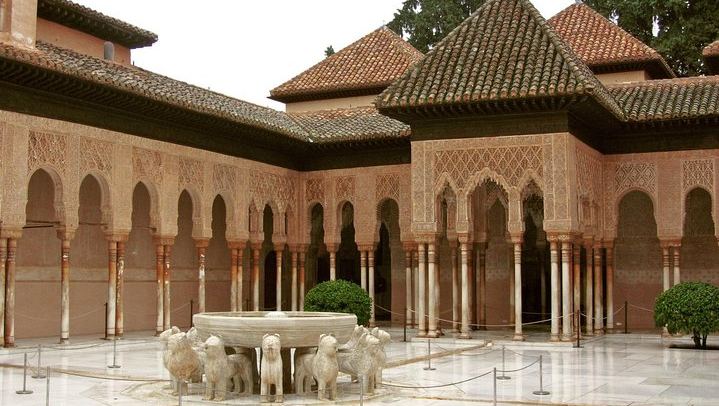
The Nasrid Palaces are two independent palaces, Comares and the Lions, with the Mexuar attached, built in the first third of the 14th century. This was the Alcazar, the Qasr al-Sultan, the core of the Nasrid kingdom. The sultans lived here, received audiences, settled the business of government and ran the administration of the court.
Palace of Carlos V
The palace of Charles V was built by the architect Pedro Machuca. Nothing else looks like it: a square building with a circular courtyard cut into the middle of it, and the finest piece of Spanish Renaissance architecture there is.
Generalife
The Generalife is the garden villa the Muslim kings of Granada used to get away from the court. It was built as a country estate, with ornamental gardens, orchards and buildings worked into one another just outside the Alhambra. The name comes from Yannat al-Arif, the Architect's Garden, after the gardens and orchards that supplied the Nasrid court with fruit and vegetables. The palace itself, built as a place for the monarch to rest, was called the royal house of happiness by the poet Ibn al-Jayyab.
Palacio El Partal
The Partal holds the archaeological and architectural remains of the palace quarters. Its Arabic name means portico, after what is left of the residence of Sultan Muhammad III, the furthest north and the oldest on the site. The gardens around it carry the traces of several palaces, because the Muslim nobility lived up here. The largest was the Palace of Yusuf III, laid out much like the Palace of Comares, and demolished in the 18th century. The Partal gardens are the best place on the site to slow down or sit for a while.
C. Real de la Alhambra, s/n, Granada
The tour ends inside the Alhambra
Not included
- Transportation to/from attractions
- Hotel pickup and drop-off (optional)
- Gratuities
Good to know
- Service animals allowed
- Public transportation options are available nearby
- Suitable for all physical fitness levels
- Passport name, number, expiry, date of born and country is required at time of booking for all participants.
Show 5 moreShow less
- A current valid passport/ID card is required on the day of travel
- The tour requires a minimum group of 6 participants to take place. If exceptionally the minimum number is not reached, they will be given an audio guide and the difference will be refunded.
- Up to 15 travelers per booking.
- Mobile or paper ticket accepted
- Guiding available in: en, it, fr, es.
Reviews
Loading reviews…