Castles · Tour
Belém by Sidecar, with Monsanto Forest and the Bica Funicular on the Way Back
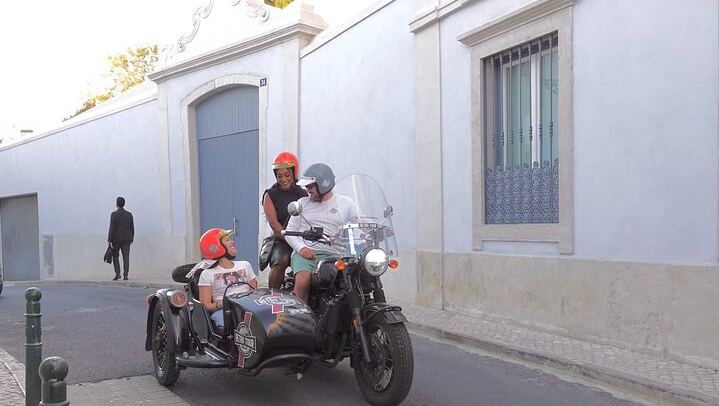
Lisbon from the seat of a sidecar, private, on a route that gets to places a coach cannot turn into. It starts in Chiado, crosses Pink Street and comes out on the views over the 25 de Abril Bridge. From there the road follows the Tagus past the MAAT and the Electricity Museum, down to the Belém Tower. The way back is the part that makes this different: up into Monsanto, the forest park on the hills above the city, then Amoreiras, then past the Tram 28 and the Bica funicular before finishing back in Chiado. Fifteen stops, a good deal of wind, and a view from about a metre off the road.
What's included
- Anecdotes
- Gloves
- 1 or 2 passengers per sidecar (one behind the pilot and one in the basket)
- Rain gear (if necessary)
Show 1 moreShow less
- Helmets
Itinerary
The map could not be loaded. Please try again in a moment.
R. Garrett 88, Lisboa
Right in front of the Basilica of Our Lady of the Martyrs, at the Baixa-Chiado metro station.
Museu Arqueologico do Carmo
The Carmo Archaeological Museum sits inside the Gothic ruins of the old Carmo Church, half destroyed by the 1755 earthquake. It is open to the sky, which is the whole point of it, and it holds an archaeological collection running from prehistory to the Middle Ages. As much a record of what Lisbon survived as of what it collected.
Campo dos Martires da Patria
Just outside the busy centre, Campo dos Mártires da Pátria is a green square with a quieter version of Lisbon in it. Shaded paths, a leafy garden, and locals rather than visitors. The square is named for the martyrs of the fatherland, and it is a genuine break from the standard routes.
Miradouro Das Portas Do Sol
In Alfama, the Miradouro das Portas do Sol gives one of the views Lisbon is known by. Terraced roofs, old churches, and the Tagus below all of it. Bright, busy, and worth the stop for the whole shape of the city in one look.
Praca do Comercio
On the Tagus, Praça do Comércio is the emblematic square of Lisbon. The royal palace stood here before the 1755 earthquake, and what replaced it is enormous, symmetrical, yellow, and arcaded. It opens straight onto the river, and the Rua Augusta Arch makes it the gateway into the rest of the city.
Located along the Tagus River
On the river, Cais do Sodré is the district changing fastest in Lisbon. It was the working port, and the maritime past is still visible under the bars. Pink Street is here, along with the restaurants and the Time Out Market, and it is where the city goes out.
Time Out Market Lisboa
In Cais do Sodré, the Time Out Market Lisboa is the food address of the city. It lives inside the old Mercado da Ribeira and gathers chefs, restaurants and Portuguese specialities under one roof. Loud, busy, and genuinely good, which is a rarer combination than it sounds.
Ponte 25 de Abril
The 25 de Abril Bridge connects Lisbon to the south bank of the Tagus. It opened in 1966, and the comparison with San Francisco's Golden Gate follows from the suspension design and the red paint. It runs over 2 kilometres, and the views from it take in the city, the river and the hills behind.
Torre de Belem
In Belém, the Pastéis de Belém shop is where the original version of the pastry is made. Founded in 1837, it is the only place producing the true pastéis de Belém, to a recipe handed down inside the house. The room has not changed much either, and the tarts arrive warm with the pastry still crisp.
Located along the Tagus River
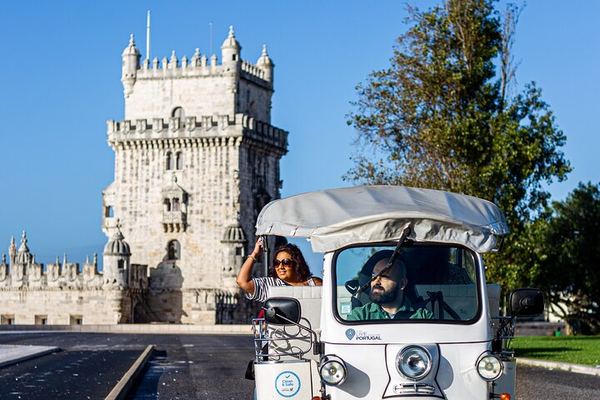
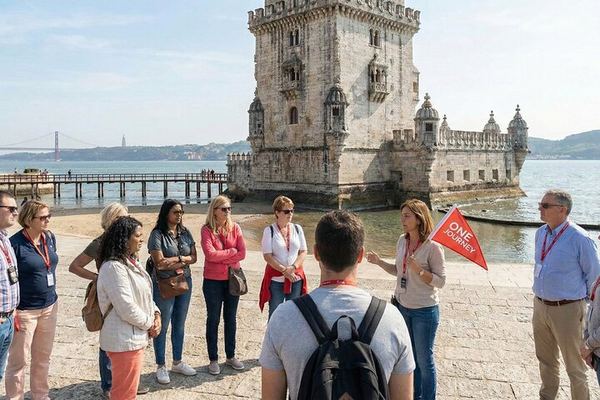
On the Tagus, the Belém Tower is the emblem of the Age of Discoveries. Built in the 16th century in the Manueline style, it guarded the entrance to the harbour. Carved stonework, balconies and turrets, a UNESCO World Heritage site, and the one photograph everybody takes in Lisbon.
Jeronimos Monastery
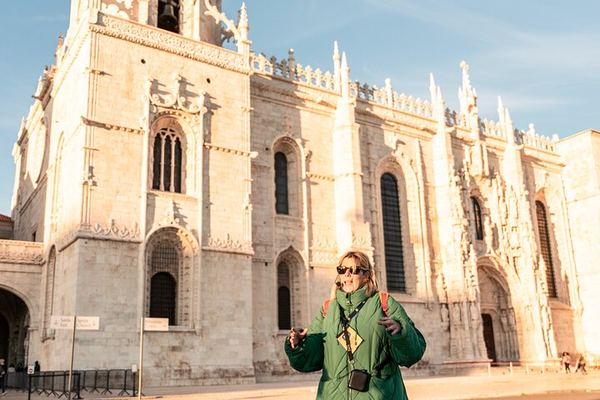
In Belém, the Jerónimos Monastery is the finest Manueline building in Portugal. Built in the 16th century for the Age of Discoveries, it is known for its carving and its cloisters. A UNESCO World Heritage site, and the burial place of Vasco da Gama and the poet Luís de Camões. The maritime history of the country is written into this one building.
A true green lung of Lisbon
Monsanto Forest Park is the largest green space in Lisbon. It covers the hills west of the centre, with woodland, shaded tracks and viewpoints over the city and the Tagus. Quiet, properly wooded, and ten minutes from the traffic.
Basilica da Estrela
In Estrela, the basilica is the best Baroque and Neoclassical building in Lisbon. Built in the 18th century, it has a white dome visible from half the city and two towers either side of it. Inside there is marble and fine decoration, and the roof terrace gives a panorama over the city.
Connecting the Bica district to Bairro Alto
The Bica Funicular connects Bica to Bairro Alto and is one of the emblems of Lisbon transport. It has been running since 1892, a small yellow carriage descending a narrow street of coloured houses and tiled balconies. Probably the most photographed 200 metres in the city.
Located at the crossroads of Chiado and Bairro Alto
Between Chiado and Bairro Alto, Praça Luís de Camões is one of the squares everyone in Lisbon knows. The statue of the poet stands in the middle, and the square works as a meeting point where the culture, the history and the daily life of the city overlap. Cafés, bookshops and good buildings all around it.
Lisbon District
Back to the starting point.
R. Garrett 88, Lisboa
Not included
- Meals
Good to know
- Wheelchair accessible
- Service animals allowed
- Public transportation options are available nearby
- Infants are required to sit on an adult’s lap
Show 8 moreShow less
- Transportation options are wheelchair accessible
- All areas and surfaces are wheelchair accessible
- Suitable for all physical fitness levels
- Suitable for ages 4 to 99
- Maximum allowed weight: 150 kg (330 lbs) per person
- Up to 4 travelers per booking.
- Mobile or paper ticket accepted
- Guiding available in: en, fr.
Reviews
Loading reviews…