Castles · Tour
Three Palaces on Foot and Afternoon Tea at the Orangery
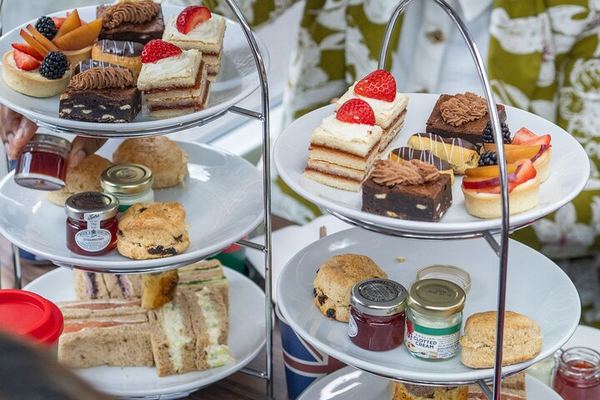
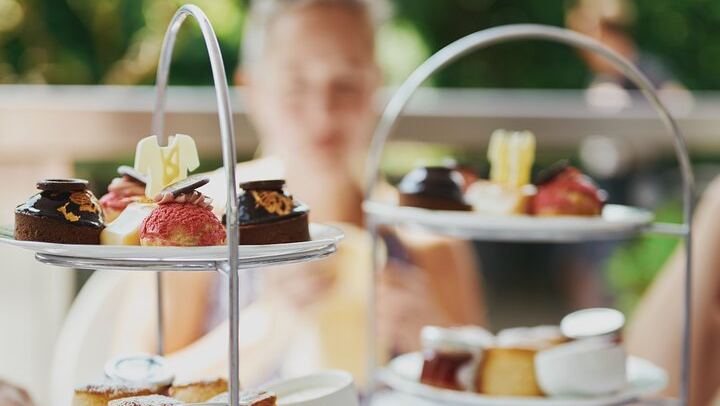
Three palaces in a morning, and the walk ends where few others do: at the Orangery in Kensington Gardens, a tea room 300 years old and established by Queen Anne, for a full afternoon tea of sandwiches, scones and cakes with a choice of teas. Dietary preferences are catered for and there is a children's tea. The route starts at Green Park and turns away from the crowds almost immediately, into the back streets of St James's. This is the aristocratic quarter, where the landed gentry and the political classes met in the chocolate houses and taverns that became the clubs of the 17th century. Spencer House stands at the end of one of those streets, built between 1756 and 1766 for the first Earl Spencer, an ancestor of Diana, Princess of Wales, and the finest surviving 18th-century town house in London. St James's Palace is the Tudor building where the King was proclaimed monarch. On Changing of the Guard mornings the walk catches the inspection of the Old Guard there, then follows the band to Buckingham Palace. From there Wellington Arch, the Bomber Command Memorial and Apsley House, then a short ride on a red bus to the Royal Albert Hall. Kensington Gardens close the walk, with a thousand years of history, the Albert Memorial, the statue of Princess Diana, and the parkland leading to the Orangery.
What's included
- Entrance to the State Rooms (if selected at check out)
- Knowledgeable Guide and Royal history walk
- The history of tea drinking in England
- Small Group, maximum of 10, typically 4-6 guests
Show 2 moreShow less
- A Private Table at the Afternoon Tea Venue
- Afternoon Tea of Sandwiches, Scones & Cakes. (NB: Child Tea is typically for 11 yrs & younger)
Itinerary
The map could not be loaded. Please try again in a moment.
Underground Ltd, Devonshire House, Piccadilly, London
We meet at the Park Gate between the Ritz Hotel and the station entrance, where the black gates are, under the porch of Green Park Station at street level. Nearest Underground: Green Park
Green Park
Formally known as Upper St James Park, Green Park is where the tour starts. From here the route heads away from the crowds, into the quiet corners and discreet passageways that the regular tours never use.
St. James's
St James's is the main aristocratic quarter of London, where the landed gentry and the political classes met in chocolate houses and taverns that became prestigious clubs in the seventeenth century. The walk goes through its little-used back streets and the history attached to them.
Spencer House
Spencer House stands at the end of the small street. It was built between 1756 and 1766 for John, first Earl Spencer, an ancestor of Diana, Princess of Wales (1961-1997), and it is London's finest surviving eighteenth-century town house.
The Mall
St James's Palace remains the official London royal palace and is not regularly open to visitors, though the public can attend Sunday services at the Chapel Royal and the Queen's Chapel.
Clarence House
The house was built between 1825 and 1827 to a design by John Nash, commissioned by the Duke of Clarence, who became King William IV in 1830 and reigned until 1837. He lived here rather than at the adjacent St James's Palace, an ancient Tudor building he found too cramped.
St. James's Palace
Back through the aristocratic quarter, where seventeenth-century chocolate houses and taverns turned into the clubs that still occupy these buildings. The back streets here see little traffic and carry a good deal of history.
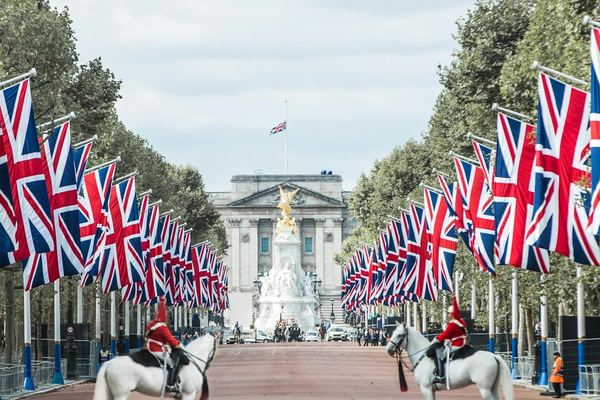
Buckingham Palace
In the Middle Ages the site of the future palace was part of the Manor of Ebury, also called Eia. The marshy ground was watered by the river Tyburn, which still runs below the courtyard and the south wing. Where the river could be forded, at Cow Ford, the village of Eye Cross grew up. The site changed hands many times: Edward the Confessor and his queen consort Edith of Wessex held it in late Saxon times, and after the Norman Conquest it passed to William the Conqueror, who gave it to Geoffrey de Mandeville. He left it to the monks of Westminster Abbey.
Wellington Arch
Across to the Wellington Arch, by Decimus Burton, 1828. The four-horse chariot with a figure of peace was added in 1912. The central passage was reserved for royalty.
Bomber Command Memorial
The Royal Air Force Bomber Command Memorial commemorates the crews who flew missions during the Second World War. It stands on the south side of Piccadilly, facing Hyde Park Corner, and marks the loss of 55,573 aircrew from Britain, Canada, Australia, New Zealand, Czechoslovakia, Poland and other allied countries, along with civilians of all nations killed during raids.
The house was originally built in red brick by Robert Adam…
The house was originally built in red brick by Robert Adam between 1771 and 1778 for Lord Apsley, the Lord Chancellor, who gave it its name. Some of the Adam interiors survive: the Piccadilly Drawing Room, with its apsidal end and Adam fireplace, and the Portico Room behind the giant Corinthian portico that Wellington added.
Royal Albert Hall
The Royal Albert Hall is a concert hall on the northern edge of South Kensington, seating 5,272. Queen Victoria opened it in 1871, and the leading performers in many genres have appeared on its stage since.
Albert Memorial
The Albert Memorial in Kensington Gardens is among the most ornate monuments in London. It commemorates Prince Albert, who died of typhoid in 1861.
Kensington Palace
George II was blind in one eye and hard of hearing. At Kensington Palace on 25 October 1760 he rose as usual at 6:00 am, drank a cup of hot chocolate and went to his close stool alone. A few minutes later his valet heard a loud crash and found the king on the floor. He was lifted into his bed and Princess Amelia was sent for; he was dead before she reached him. At nearly 77 he had lived longer than any English or British monarch before him. A post-mortem found a thoracic aortic dissection. His grandson George III succeeded him, and he was buried on 11 November in Westminster Abbey, having left instructions for the sides of his coffin and his wife's to be removed so that their remains could mingle. He is the last monarch buried in Westminster Abbey.
Kensington Gardens, London
The tour ends at the Orangery, where the high tea is served.
Not included
- Private Transport
- No entrance to Palaces / Walking tour (unless selected at check out)
- Bus fare - please bring a Contactless Card or Oyster Card
- Can be purchased during the tea service
Good to know
- Infants and small children can ride in a pram or stroller
- Service animals allowed
- Public transportation options are available nearby
- Not recommended for travelers with spinal injuries
Show 7 moreShow less
- Not recommended for travelers with poor cardiovascular health
- Suitable for all physical fitness levels
- We offer Gluten Free, Vegetarian, Vegan & Halal on prior request
- Not suitable for those with walking difficulty, we walk for about 60 mins
- Up to 15 travelers per booking.
- Mobile or paper ticket accepted
- Guiding available in: en.
Reviews
Loading reviews…