
Harry Potter Filming Locations: The Castles You Can Walk Into, and the Halls That Were Sets
Hogwarts was never one building. Alnwick's outer bailey hosted the first flying lesson, Durham's cloister was a corridor, and the Great Hall people queue for at Christ Church was built in Hertfordshire. We read nine owners' own pages on 21 October 2026.
People arrive at Christ Church in Oxford expecting the Great Hall, and they do get a great hall. It is simply not the one in the films. Lists of Harry Potter filming locations tend to put every castle, cathedral and college into a single column, and that column hides the one distinction that decides whether a detour is worth the train fare: some of these places were filmed in, some were copied in a studio, and some were only ever an influence.
So we spent 21 October 2026 reading what the bodies that own these buildings say about them, rather than what the fan guides say. The owners turn out to be a great deal more careful. Several of them go out of their way to tell you that the thing you came for was built somewhere else.
Christ Church owns up to one staircase
Start with the clearest case. The college's own page on what there is to see mentions Harry Potter exactly once, under the Hall staircase, which it says may be familiar, having been used in a number of film and television projects including Lewis and Harry Potter. The Great Hall gets its own section a few lines below. That section says nothing about filming at all.
Meanwhile the studio tour at Leavesden, where the Hogwarts Great Hall set still stands, says the set was designed to resemble the sixteenth-century hall in the famous Oxford College, Christ Church. It is almost 120 feet by 40, seats 400 children, and was floored in real York stone so it would survive the best part of a decade of filming. Two buildings, one in Oxfordshire and one in Hertfordshire, and the one on the screen is the second.
This is not a gotcha about Oxford. It is the pattern. Once you know to look for it, the owners' pages sort themselves into three states.
The three states of a Harry Potter filming location
Filmed there. A camera was in that room and you can stand where it stood. Built as a set. Either a copy of a real room, or a building that never existed outside a studio floor and was taken apart afterwards. Inspired only. The place fed the design and never appeared.
The three states behave very differently on a trip. A filmed location rewards going. A set does not exist to visit, however many coach tours point at the place it was copied from. An inspiration is a nice fact and a bad reason to spend a day in a car. Here is the whole list we could verify, each line in the owner's own words.
| Place | What the owner says happened there | Which of the three | Can you go in? |
|---|---|---|---|
| Alnwick Castle, Northumberland | Stood in for Hogwarts in the first two films. Outer Bailey: the first broomstick lesson, and Neville's disastrous first flight. Inner Bailey: the flying car's crash landing. Lion Arch: the route towards Hagrid's hut | Filmed | Yes, but the 2026 season closed on 20 October |
| Alnwick Castle, Guest Hall | The Hogwarts Express carriage set was built in it. The set has gone, the hall has not | Set, removed | The hall, yes |
| Durham Cathedral | Cloister: walking between lessons. Cloister Garth: Hedwig's flight, under fake snow, and the backfiring slug curse. Chapter House: McGonagall's classroom, first two films | Filmed | Yes, entry free, £5 donation asked |
| Durham Cathedral, the Dobby scene | "Filmed on a set that is an almost identical replica of Durham Cathedral's Cloister" | Set | The cloister yes, the set no |
| Christ Church, Oxford | The Hall staircase, "used in a number of film and television projects including Lewis and Harry Potter" | Filmed, staircase only | Yes, on a timed multimedia visit |
| The Hogwarts Great Hall | "Designed to resemble the sixteenth-century hall in the famous Oxford College, Christ Church" | Set, built 2000, still standing at Leavesden | Only on the studio tour |
| Bodleian Library, Oxford | "Duke Humfrey's Library was used as the Hogwarts library, and the Divinity School as the infirmary", in the films of 2001, 2002 and 2005 | Filmed | Divinity School on a ticket; Duke Humfrey's only on a guided tour |
| Gloucester Cathedral cloister | "Recognised worldwide as a filming location, including as the Hogwarts corridors" | Filmed | Yes, and under a twelve-year conservation programme |
| Lacock Abbey, Wiltshire | Cloisters as corridors and classrooms in the first two films; the Chapter House as the Mirror of Erised room | Filmed | Yes |
| Lacock village, Wiltshire | A cottage as the outside of Godric's Hollow in the first film; the streets as Budleigh Babberton in the sixth | Filmed | Yes, it is a village |
| Lavenham, Suffolk | The Guildhall as the derelict house at Godric's Hollow in Deathly Hallows Part 1 | Filmed | Yes |
| Leadenhall Market, London | Doubled for the streets leading to the Leaky Cauldron, shot in 2000/2001, and "inspired the magical street Diagon Alley" | Filmed outside, inspired inside | Yes, it is a public market |
| Freshwater West, Pembrokeshire | "Shell Cottage was constructed here", and dismantled after filming, "plus the setting of Dobby's death" | Set, dismantled | The beach yes, the cottage never existed |
| Hardwick Hall, Derbyshire | The exterior of Malfoy Manor, "with some CGI" | Filmed and altered | Yes |
| Ashridge Estate, Hertfordshire | The Quidditch World Cup campsite. The 400-year-old beech is not the Whomping Willow, "despite popular belief" | Filmed, and one myth corrected | Yes |
| Glenfinnan, Lochaber | VisitScotland puts the steam train under "All aboard the Hogwarts Express"; Loch Shiel beside the viaduct "was used as the setting for Hogwarts Lake in several scenes" | Filmed, landscape | The viewpoint yes; the viaduct by train |
| Windsor Great Park | The estate's filmography lists "Harry Potter and the Deathly Hallows - Part One and Two", and no other title in the series | Filmed, but not the film everyone names | Yes |
Alnwick Castle, and the season that closed yesterday
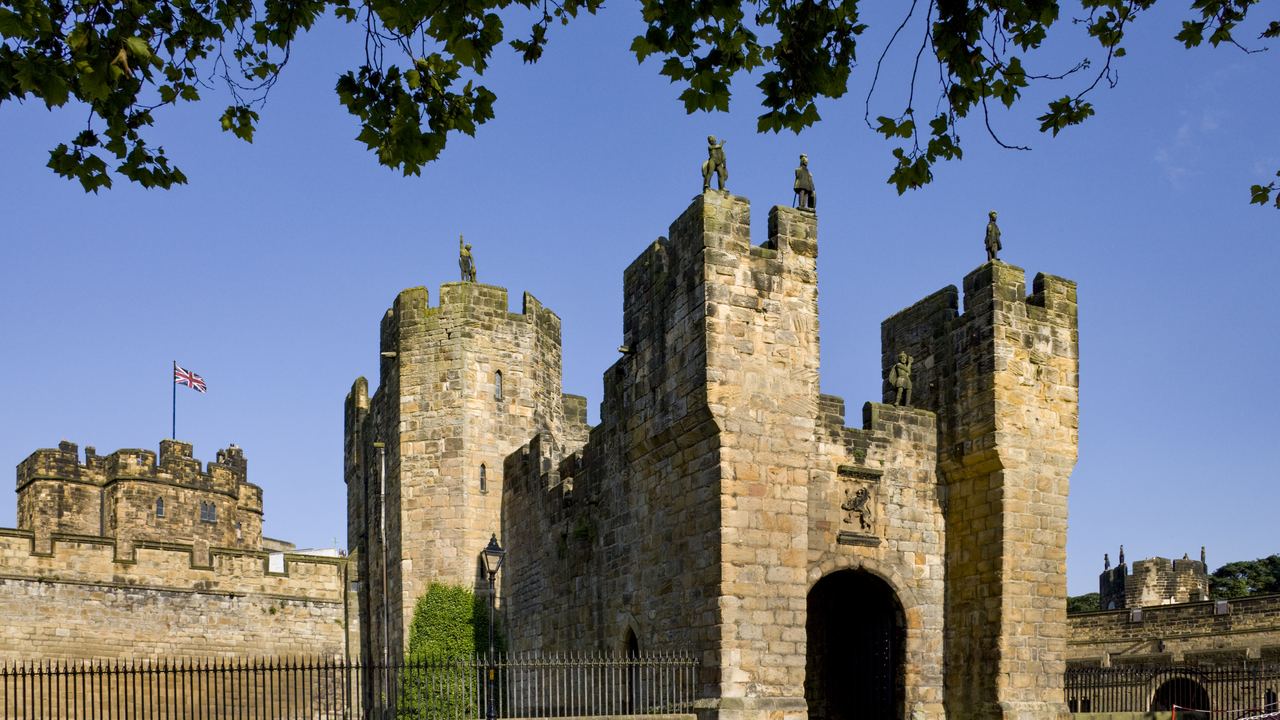
Alnwick is the one most people mean when they say a Harry Potter castle, and its own account of itself is unusually specific. The castle says it stood in for Hogwarts in the first two films. The Outer Bailey is where Harry's first broomstick lesson was shot, and the castle adds that Neville's disastrous first flight was also filmed at Alnwick. The courtyards and Inner Bailey carried scenes in both films, including the crash landing of the Weasleys' flying car. The Lion Arch was the route students took towards Hagrid's hut and the Forbidden Forest. The Guest Hall is where the Hogwarts Express carriage set was built, and the castle is careful about this: the set has gone, but you can stand in the hall where it was constructed.
What it sells on top of that is honest too. Broomstick Training happens on the outer bailey itself, free with admission, on a timed ticket collected when you arrive, weather permitting. There are guided film tours. Admission is £22.00 for an adult booked online and £24.45 at the gate, £17.90 or £19.90 concession, £11.60 or £12.90 for a child of five to sixteen, and £64.20 or £71.35 for a family of two adults and up to four children. Under-fives go free. The useful part is buried under the prices: an online ticket is an annual pass, valid twelve months from the first visit, and a gate ticket can be upgraded to one at no extra cost on the day.
None of which is any use this week. On 21 October 2026 the castle's own opening page reads Our 2026 season has come to a close, with no reopening date published. What is listed is a Christmas Fair and a carol event, not the castle. If you are reading a listicle today that tells you to go to Alnwick for the flying lesson, the listicle has not looked. This is the same trap we set out last week when we compared what shuts for winter and what only shortens its hours: the closure only ever lives on the owner's page.

What is left when the season ends
Everything that was filmed is inside these walls
The gatehouse is what a visitor can see from the street, and from now until the castle opens again it is all a visitor can see. The outer bailey with the flying lesson lawn, the inner bailey where the car comes down, the Lion Arch and the Guest Hall are all behind it, on the paid side of the gate.
Worth knowing before a winter detour: Alnwick sells the castle and its grounds as one ticket, and when the season closes, both go.
Durham, where the corridor is real and Dobby's scene is a replica
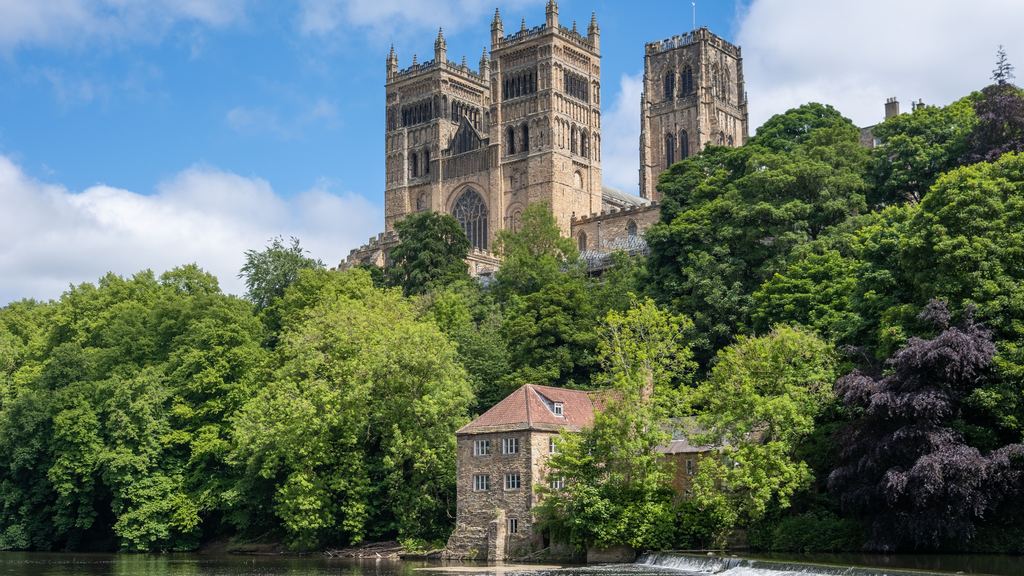
Durham Cathedral is the opposite case to Christ Church: it tells you more than you asked. Its filming page covers the first two films and goes room by room. The Cloister walkways are the corridors the three of them walk between lessons in the first film. The Cloister Garth was buried in fake snow for the scene in which Harry releases Hedwig over the castle, and in the second film it is where Ron's curse backfires and he starts producing slugs. The Chapter House was used as the filming location for Professor Minerva McGonagall's classroom in the first two Harry Potter films, the room where the children try to turn animals into goblets. The cathedral even claims the inkwell on McGonagall's desk: it says it was used by previous Chapter Clerks in the cathedral's own office.
And then it gives away the thing no commercial page would.
Filmed on a set that is an almost identical replica of Durham Cathedral's Cloister.
That one sentence is worth more than most of this article. The cathedral is telling visitors that the single scene they are most likely to be looking for in its cloister was not shot in its cloister. A replica was built, and it was built because a production cannot keep a working cathedral for as long as it needs a corridor. Nobody loses by knowing this. You still walk the real cloister, and you walk it knowing which frames came from it.
Practicalities, because they are unusually kind here. Entry is free, and the cathedral asks for a £5 donation if you can manage it. Normal visitor hours are 9.30am to 4.30pm Monday to Saturday, and 12.30pm to 3pm on Sunday, when the building opens earlier but belongs to its congregation first. The Chapter House is open 10am to 4pm Monday to Saturday, with some dates excluded for services and events, which is a real caveat and not boilerplate: for years that room was effectively closed to the public. One date to carry if you are nearby: the cathedral's own page says there is no access to the cathedral between 1pm and 4pm on Thursday 22 October, for a funeral.
Harry Potter filming locations in Oxford: a staircase, a library and an infirmary
Oxford has two of them and they work on completely different rules. At Christ Church the filmed thing is the Hall staircase, with its fan vault of 1638 under a structure of 1805, and you pass it on the way into the hall that is not the Great Hall. The college's visit is a timed multimedia tour and the guide is both included in the price and compulsory, so there is no cheaper way in. For Michaelmas term, 4 October to 12 December 2026, an adult pays £22.95 on a weekday and £24.95 at the weekend, with £2 off each ticket for booking online or at the Visitor Centre in advance. Over the Christmas vacation, 13 to 31 December, the same tickets go to £24.95 and £26.95. Tickets are released in weekly batches, the following week's at about 10am each Friday, which is the detail that decides whether you get in at all during a half term.
The Bodleian is more generous and more restricted at once. Its filming page is unambiguous: Duke Humfrey's Library was used as the Hogwarts library, and the Divinity School as the infirmary, and it names three films, those of 2001, 2002 and 2005. The Divinity School is open daily on a ticket and you can walk it by yourself, which makes it the only room on this whole list you can see at your own pace. Duke Humfrey's is a working reading room, and the only way a visitor gets inside is a guided tour: 60 minutes, from £17.50, daily, age eleven and over, with tickets released online at 9am UK time on the 1st and 15th of each month.
How little of the day that room can give is spelled out in the library's rules for film crews, who are allowed into Duke Humfrey's only between 7.30 and 8.30 in the morning on weekdays. An hour, before the readers arrive. That is the whole reason the Hogwarts library appears in three films and never for long.
Gloucester's cloister is open, and being rebuilt around you
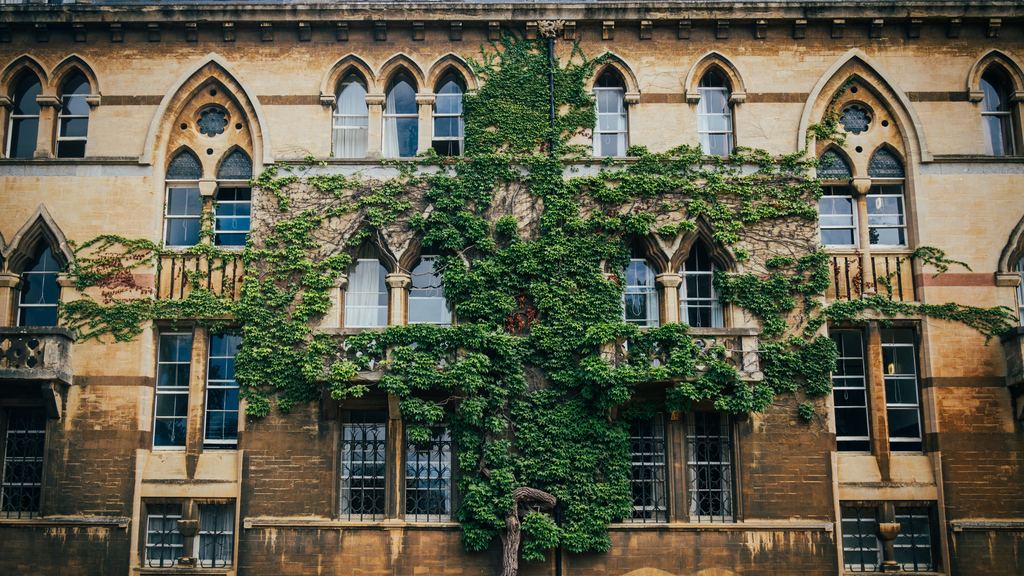
Gloucester Cathedral gave the films more corridor than anywhere else, and its own conservation page describes the cloister as recognised worldwide as a filming location, including as the Hogwarts corridors in the Harry Potter films. It is also, right now, a building site with a published timetable, and the timetable is longer than most people's remaining travelling lives.
The East Cloister Project runs between autumn 2025 and summer 2027. It is the first phase of the Great Cloister Project, which the cathedral calls a twelve year conservation programme running from 2025 to 2037: the South Walk from 2027 to 2030, the West Walk from 2031 to 2033, and the North Walk with the Dark Entry from 2034 to 2037. Phase one covers the roof, the stonework, the stained glass and the rainwater systems, including taking out reinforced autoclaved aerated concrete and replacing cement repairs with lime mortars.
Which means that for the next eleven years one quarter of the Hogwarts corridor will be behind something. The cathedral does not hide it. It sells a 30-minute Cloister tour on selected Saturdays at 11am, £6 for an adult and £3 for a child under sixteen, bought on the day at the Welcome Desk, and its own pitch is to witness conservation in action as these famous corridors are carefully restored. Turning a closure into the tour is a better answer than pretending the scaffolding is not there, and it is more than the aggregator pages manage: none of them mentions the programme at all.
Glenfinnan, where the train operator does not mention Harry Potter
The viaduct is the strangest entry on the list, because the company that runs the train across it says nothing about the films. West Coast Railways describes the Jacobite as 84 miles from Fort William to Mallaig and back behind a working steam locomotive, and describes the structure in the language of an engineer: twenty-one arches curving about a hundred feet above the River Finnan, with Loch Shiel below, a Category A listed crossing, and the train slowing on it when time allows. The films it names as shot along that coast are Local Hero and Highlander. The Hogwarts Express does not appear on the page.
It is VisitScotland, the national tourism body, that files the train under All aboard the Hogwarts Express, and VisitScotland is also the source for the detail most guides get wrong by omission: it is Loch Shiel, not the viaduct, that it names outright, saying the loch was used as the setting for Hogwarts Lake in several scenes. For the viaduct itself it says only that the scenery is straight out of the films, without naming one.
The dates matter this week. The operator's 2026 morning service runs Monday 1 June to Friday 23 October, and the afternoon service finished on 25 September. So the last steam crossing of the year is the day after tomorrow. VisitScotland says the train runs April to October; the operator's own calendar starts in June. Where a tourist board and the company selling the tickets disagree, take the company. The viewpoint above the visitor centre is there all year and costs nothing, and what crosses the viaduct outside the steam season is an ordinary scheduled train, which is the version of this trip our page on castles you can reach by train is built around.

The places that were never there: sets, CGI and one famous tree
The National Trust's filming pages are the best single document on this subject in Britain, largely because the Trust is not trying to sell anybody a wand. Three entries are worth copying out.
Freshwater West in Pembrokeshire. The beach is real and open. Shell Cottage, the Weasleys' house and the safe house of the last two films, was constructed here and dismantled when filming finished. The Trust also records the beach as the setting of Dobby's death. So the single most visited thing in that story is a building that never existed as a building, and the people who arrive looking for it are looking for an absence. Whether anything stands there now as a memorial we could not establish from the Trust's own pages, so we are not going to tell you it does.
Hardwick Hall in Derbyshire. The exterior of Malfoy Manor, and the Trust says it plainly: with some CGI. The house on screen is this house with its proportions pulled about. Filmed and altered is its own category, and it is where a surprising number of the grander locations sit.
Ashridge Estate in Hertfordshire. The Quidditch World Cup campsite from the fourth film, and a correction the Trust evidently got tired of making in person: the 400-year-old beech that visitors photograph is not the Whomping Willow, despite popular belief. The tree Cedric Diggory jumps down from stands in the Frithsden Beeches, and it split in two in 2014. A castle myth has to be corrected by the people who own the thing, or it never dies, which is the whole argument behind our list of nine things everyone believes about castles.
One more pleasure from the same pages. Godric's Hollow was played by a cottage in Lacock, Wiltshire, in the first film, and by the Guildhall at Lavenham in Suffolk in Deathly Hallows Part 1. Two villages, 150 miles apart, cast as the same place ten years apart. If you were going to make a pilgrimage to Harry's birthplace, you would have to make two.
Four that earn the detour
Chosen on what the owner says is actually there, and on whether you can get into it without a studio ticket.
Alnwick Castle, Northumberland
The outer bailey where the first flying lesson was shot is a lawn you can stand on, and the castle runs broomstick lessons on it, free with admission and weather permitting. Closed now until the spring.
Durham Cathedral
The cloister you walk through is the one on screen, entry is free, and the cathedral will tell you unprompted which famous scene was shot on a copy of it instead.
The Divinity School, Oxford
Fifteenth-century vaulting, the Hogwarts infirmary in three films, and the only room on this list you can see on a self-guided ticket rather than a timed tour.
Lacock, Wiltshire
An abbey whose cloisters played corridors and classrooms, and a village that played Godric's Hollow in one film and Budleigh Babberton in another.
What the Harry Potter filming locations cost, and what a day of them really is
Add the admissions up and the money is not the problem. Durham is free. Gloucester's cloister tour is £6. The Bodleian's hour is from £17.50, Christ Church is £22.95 to £26.95 depending on the day and the term, and Alnwick is £22.00 to £24.45 in the months it opens. A person could see all five for less than the price of one studio ticket.
The problem is the map. Northumberland, County Durham, Oxford, Gloucester, Wiltshire, Suffolk, Pembrokeshire, Hertfordshire, Derbyshire and Lochaber. These places are scattered the length of Britain because a film unit chose each of them for one room, not because they form a route. Any itinerary that promises Hogwarts in a long weekend is quietly dropping most of this list, and the arithmetic of how many of these you can honestly fit in a day is the same arithmetic we set out in how long a castle takes, and how many fit in a day.
There is a last thing worth saying about the one that is coming. A new television adaptation is in production, and none of the owners' pages we read on 21 October 2026 mentions hosting it: not Alnwick, not Durham, not Gloucester, not the Bodleian, not the National Trust. Until one of them says so on its own site, any article telling you where the series is filming is telling you something it cannot know. That is the same test this site applies to a ticket price or an opening date, and it is why our dossier on what you actually see when you go inside is built on what custodians publish rather than on what circulates.
Castle visits across the United Kingdom
None of the places above is a catalogue destination of ours, which is the honest answer: these are cathedrals, colleges and a railway. What we do sell in Britain is the castles themselves.
Beauly, Urquhart, Cawdor Castle and Culloden in a Day
Two castles rather than one: Cawdor, lived in by 23 generations, alongside Urquhart. Culloden's battlefield is free; the exhibition is not, and is worth it.
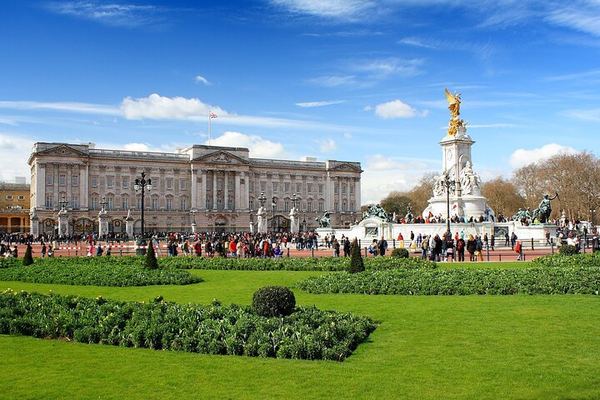
Changing of the Guard from Green Park to Parliament Square
The walk follows the ceremony rather than waiting for it: it starts at St James's Palace, ends at Buckingham, and leaves you opposite Big Ben.
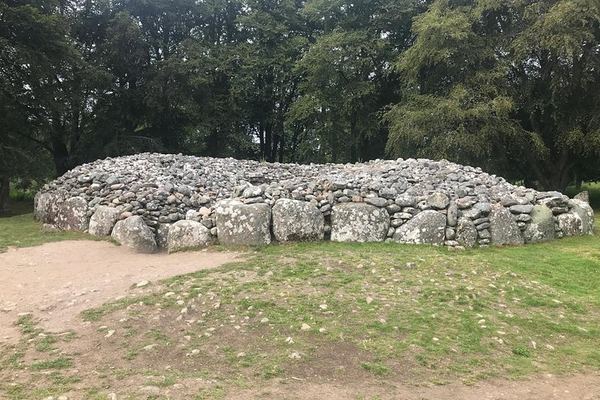
Loch Ness, Glen Ord and the Dolphins at Chanonry Point
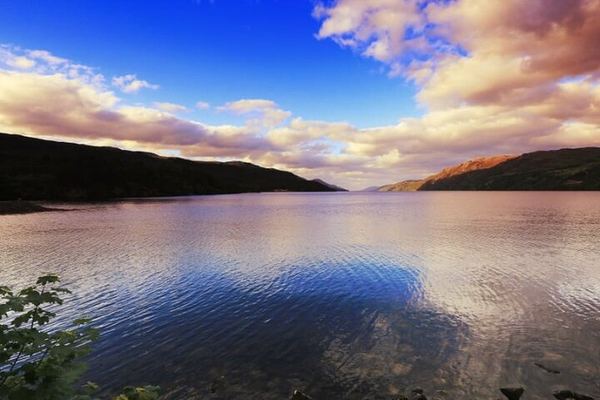
The only Loch Ness day here that detours to the Black Isle for dolphins at Chanonry Point and Fortrose Cathedral, with three single malts at Glen Ord.
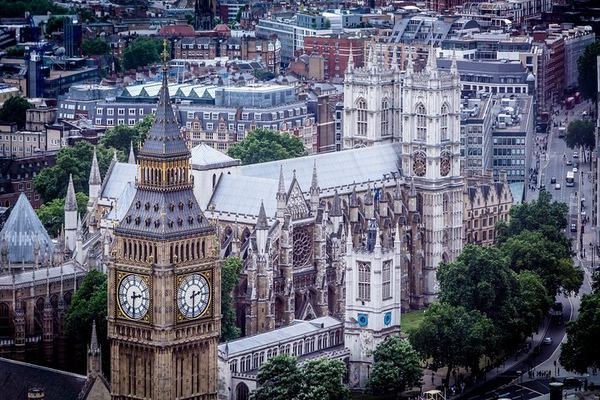
London Highlights by Tube and Bus, with Westminster Abbey and the Tower
No coach on this private day: you cross London on the tube and buses, with 90 minutes inside Westminster Abbey and the Tower of London included.
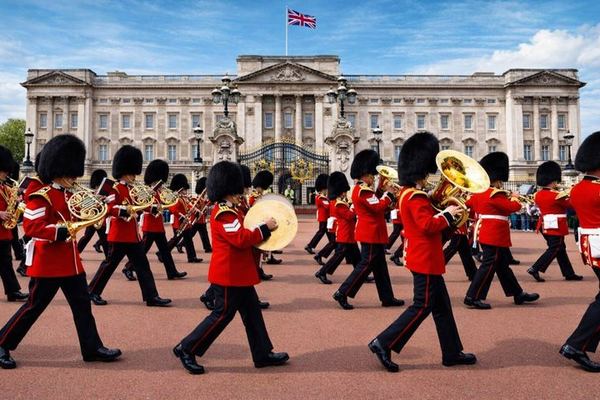
Marching Down The Mall: Changing of the Guard with a Historian
Designed with a former Guardsman, this walk moves with the Guards and the band down The Mall instead of watching from behind a railing.
Ratings collected by Viator and Tripadvisor
Harry Potter filming locations: the questions people actually ask
Is Hogwarts a real castle?
No. Hogwarts on screen is a composite of real buildings, studio sets and models, and the proportions of the castle itself were never built anywhere. The real buildings that supplied rooms include Alnwick Castle, Durham Cathedral, Gloucester Cathedral, Lacock Abbey, the Bodleian Library and the Hall staircase at Christ Church. The Great Hall, the room most people picture when they hear the word, is a set built at Leavesden in 2000 and still standing there.
What was filmed at Alnwick Castle for Harry Potter?
By the castle's own account, it stood in for Hogwarts in the first two films. The Outer Bailey carried Harry's first broomstick lesson and Neville's first flight. The Inner Bailey carried the crash landing of the flying car. The Lion Arch was the route towards Hagrid's hut and the Forbidden Forest, and the Guest Hall was where the Hogwarts Express carriage set was built, though the set itself is long gone. Note that the castle's 2026 visitor season closed on 20 October and no 2027 opening date had been published when we read the page on 21 October 2026.
Is the Great Hall at Christ Church the Hogwarts Great Hall?
It is not. The studio tour says the Hogwarts Great Hall set was designed to resemble the sixteenth-century hall at Christ Church, measures almost 120 feet by 40, seats 400 children and was laid with real York stone. Christ Church's own page on things to see mentions Harry Potter only under the Hall staircase. You can visit the college hall, and it is a fine room. You are visiting the original of a copy, not the set.
Which Harry Potter scene at Durham Cathedral was not really filmed there?
The scene in which Harry frees Dobby. The cathedral states that it was filmed on a set that is an almost identical replica of its cloister. Everything else it lists was shot in the building: the cloister walkways as corridors, the Cloister Garth under fake snow for Hedwig's flight and again for Ron's backfiring slug curse, and the Chapter House as McGonagall's classroom.
Can you ride the Hogwarts Express over the Glenfinnan Viaduct?
You can ride a steam train over the viaduct. The operator, West Coast Railways, runs the Jacobite 84 miles between Fort William and Mallaig, and its own page describes the viaduct's twenty-one arches about a hundred feet above the River Finnan without mentioning Harry Potter at all. The 2026 morning service runs from 1 June to 23 October, and the afternoon service ended on 25 September. VisitScotland gives the season as April to October, which does not match the operator's published dates; use the operator's. Watching the train from the hillside viewpoint costs nothing and is possible whenever the train is running.
Was the Whomping Willow a real tree?
Not the one visitors photograph. The National Trust says that the 400-year-old beech at its Ashridge Estate is not the Whomping Willow despite popular belief, and that the tree Cedric Diggory jumps from is in the Frithsden Beeches, where it split in two in 2014. Ashridge's real credit is the Quidditch World Cup campsite in the fourth film.
Can you visit Shell Cottage at Freshwater West?
There is no cottage to visit. The National Trust records that Shell Cottage was constructed on the beach for filming and dismantled afterwards, and that the beach was the setting of Dobby's death. The beach is open and free. The house was a set.
Which Harry Potter film was shot in Windsor Great Park?
The estate's own filmography lists Harry Potter and the Deathly Hallows, Parts One and Two, and no other title in the series. It makes no mention of the Triwizard Tournament or of the fourth film, which are what the park is usually credited with online.
Data verified on . Read 21 October 2026 on the owners' own pages: alnwickcastle.com, durhamcathedral.co.uk, visit.bodleian.ox.ac.uk, gloucestercathedral.org.uk and nationaltrust.org.uk. Editorial Policy


