
Is Neuschwanstein Worth Going Inside? Thirty Minutes, Fourteen Rooms, No Photographs
Twenty-one euros, about thirty minutes, fourteen rooms and no photographs. What the Bavarian Palace Administration publishes about going inside Neuschwanstein, what the walk up really costs, and why Hohenschwangau charges more. Read from their own pages, 23 September 2026.
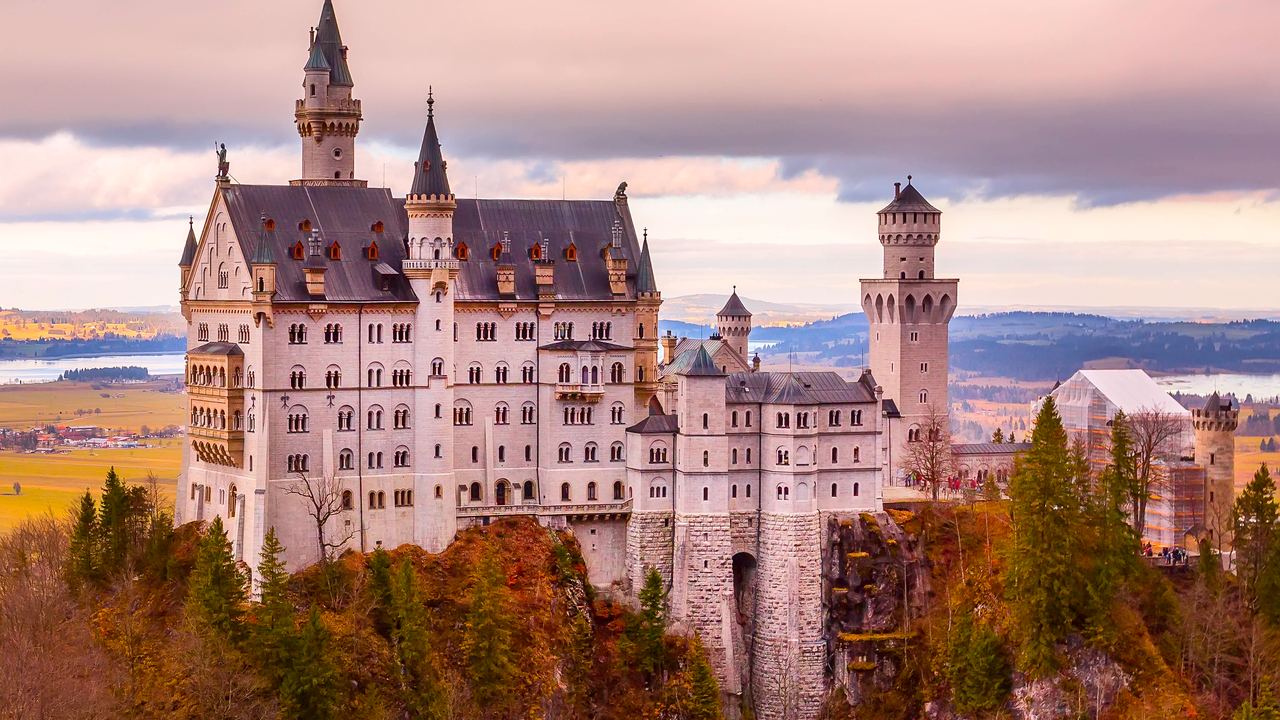
Is Neuschwanstein worth going inside? The Bavarian Palace Administration answers most of that question itself, in figures it publishes without comment. Twenty-one euros. About thirty minutes. Fourteen rooms. Entry is possible only as part of a guided tour, photography for private purposes is not allowed anywhere in the castle, and the tours start punctually, a point the administration spells out because people miss them.
Most of the argument about this castle happens at the wrong end. Visitors plan around the ticket, then find on the day that the ticket was the easy part: between the ticket centre in the village and the castle door lie a kilometre and a half of steep road, and nothing sold by anybody shortens it. What follows is what the bodies publish about their own buildings, read on 23 September 2026, set against the twenty Neuschwanstein listings tracked in this catalogue.
What €21 actually buys at Neuschwanstein
The state charges €21 regular and €20 reduced, and admits children under 18 free of charge, along with students over 18 from general, vocational or special schools who show a valid student card. Buy online and there is a booking fee of €2.50 on top. Children under 14 are admitted only with an adult.
There is one counter, at the Ticket Centre in Hohenschwangau, and it sells tickets for the current day only, subject to availability. The administration's own advice is blunt about what that means in practice: box office tickets are often sold out very early, and reservations are generally not possible. A visitor who drives to Schwangau without a booking is not joining a queue. They are finding out whether there is anything left.
What the €21 admits you to is a guided tour, live in German or English, with audio guides in nineteen other languages. Not a wander. There is no version of a Neuschwanstein visit in which you set your own pace, double back to a room you liked, or sit down for a while in front of the throne room.
One administrative detail is worth carrying, because it catches people who think they have prepaid: the Bavarian annual and fourteen-day palace tickets do not cover Hohenschwangau, which is run by a different body altogether. The two castles face each other across the same valley and share nothing but a car park.

Fourteen rooms, and the storey that was never finished
A number circulates about this castle in almost every account of it: fifteen rooms finished out of two hundred planned. It does not come from the body that runs the building, which publishes no such ratio anywhere. We looked for it because the figure is repeated so confidently, and what we found instead was more useful.
What the administration does publish is that the rooms of the second upper floor remained a shell, and that they house museum service functions today. The walls are brick, faced with pale limestone. The throne room, the room everyone photographs in their head, is carried on an iron frame that is then clad. The route open to visitors runs to fourteen decorated rooms, and that is the whole of what a ticket opens.
None of this makes the interior a disappointment by itself. The murals are dense with Wagnerian subject matter and were painted by people who were extremely good at it. It does mean that a visitor expecting a furnished royal residence, in the way that Hohenschwangau or the Munich Residenz are furnished, has misread what Neuschwanstein is. It was a building site that stopped.
Ludwig II saw his new castle, right to the end, only as a building site.
He died in 1886, and the administration records what happened next in one flat sentence: seven weeks later, Neuschwanstein opened to the public. The king had built it, in the administration's words, in order to withdraw from public life. It has been receiving the public ever since, in half-hour instalments of fourteen rooms.
No photographs, and a tour that leaves without you
Three rules decide how the half hour actually goes, and all three are published.
The first is photography. Photographing or filming for private purposes are not permitted in the castle, in the administration's own wording, with no exception for phones held low and no paid licence to buy. Whatever you take home from the interior, you take home in your head. The second is luggage: rucksacks, prams, child carriers and similar bulky objects may not be taken into the palace, and the administration asks visitors to allow extra time on site for possible security checks. The third is the clock.
The guided tours start punctually; in the event of late arrival, participation in the guided tour is no longer possible.
Read that beside the ticket rules and the shape of the risk becomes clear. The castle sells nothing at the castle itself, will not move you to a later tour, and the counter in the village is same-day only and frequently empty. There is no recovery path. It is the strictest arrangement of any monument in this catalogue, and it is the single most expensive thing a visitor can get wrong at Neuschwanstein.
The ticket centre's own advice is to be in the village of Hohenschwangau at least 1.5 to 2 hours before your Neuschwanstein admission time, and at least an hour before a Hohenschwangau one. That is not padding for a gift shop. It is the climb.
The climb nobody puts a price on
From the ticket centre to the castle is about 1.5 km of steep uphill road, and takes 30 to 40 minutes on foot. That figure is published by the administration, and it is the honest headline of the day. The two paid alternatives both shorten the walk rather than removing it.
The horse-drawn carriages leave from the Hotel Müller and cannot go right up to the castle: from where they stop there is a further uphill walk of about 450 metres, or ten to fifteen minutes. The shuttle bus goes from car park P4 up to the Jugend lookout point near the Marienbrücke, and from there it is about 500 metres downhill to the castle at a gradient of 12 to 19 per cent, again ten to fifteen minutes. Neither runs to a timetable; both go by demand. And the buses do not run at all when there is snow or ice on the roads, which in a castle open through the Bavarian winter is not a rare event.
So the arithmetic of a visit is a half-hour tour wrapped in roughly an hour of hillside, plus the buffer the ticket centre asks for. Anyone weighing whether a knee, a hip or a pushchair is up to it will find the published gradients more useful than any review, and our guide to stairs, slopes and who can actually get in collects what the other monuments in this catalogue publish about the same question. Most of them publish nothing.

Neuschwanstein vs Hohenschwangau: the one somebody actually lived in
This is the comparison travellers make for themselves on forums and almost never find made in a listing, because the two castles are sold by different people and nobody selling one has a reason to describe the other.

The other castle in the valley
Hohenschwangau was rebuilt to be lived in, and then lived in
Hohenschwangau was rebuilt between 1833 and 1837 by Domenico Quaglio, on the remains of the medieval castle that stood there, and carries more than ninety wall paintings. Ludwig grew up in it. Its rooms were furnished because a family used them, which is precisely the thing the castle across the valley never got to be.
The tour is longer, at about forty-five minutes, and harder: roughly 180 steps, ninety up and ninety down, with no lift in the building. Admission is €23.50 for an adult, €19.50 reduced, €12 for children aged 7 to 17 and free under 7, plus the same €2.50 service fee.
Look at those two prices next to each other. The finished castle that a royal family actually inhabited costs €2.50 more than the unfinished one that everybody flies in for, takes half again as long to see, and is not covered by the Bavarian palace passes because a different body owns it. Nothing about the pricing reflects fame, and everything about the queues does.
That gap is the practical reason to consider doing only one of them. If the day is tight, the honest question is not which castle is better but which kind of interior you came for: the decorated shell of an idea, or the rooms where the idea was had.
| Where | At the counter | Time inside | What the ticket is |
|---|---|---|---|
| Neuschwanstein | €21, €20 reduced, free under 18, plus €2.50 booking fee | About 30 minutes | Guided tour only, fourteen rooms, no private photography |
| Hohenschwangau | €23.50, €19.50 reduced, €12 for ages 7–17, plus €2.50 | About 45 minutes | Guided tour only, about 180 steps and no lift |
| Museum of the Bavarian Kings | €14.50, €13.50 reduced, free under 18 with an adult, plus €2.50 | Not published | In the village, at lake level, no climb involved |
| Linderhof | €11 at the gate, €18 in summer with the Venus Grotto | About 25 minutes | Grotto and park pavilions close from 16 October |
A Neuschwanstein castle tour: how long the whole thing really takes
Thirty minutes is the tour. The day is something else. Stack the published figures and a visit from the car park runs to roughly three hours before anyone has eaten anything: the buffer the ticket centre asks for, the climb, the tour, the walk back down. Add the Marienbrücke and it is longer. Add Hohenschwangau and you have committed the afternoon.
From Munich it is a full day by anyone's measure. The twenty Neuschwanstein listings tracked here run from €60 to €1,400, with a median of €89, against €23.50 to walk in on your own booking. Most of that difference is a coach, a driver and a guide for eight to eleven hours, which is a real service with real costs. It is not a shorter queue and it is not a longer tour: everybody gets the same fourteen rooms and the same half hour. Our guide to how long a castle takes, and how many fit in a day works through the same arithmetic for the rest of the catalogue.
Worth saying plainly, because this site is often hard on the listings: the Bavarian ones are well reviewed. Those twenty listings carry 28,442 reviews between them and ratings from 4.4 to 5.0. Whatever people feel about the interior, they are not coming back angry at the operators.
Who should go inside, and who should keep the €23.50
Go inside if the nineteenth century is the point. The murals, the throne room, the artificial grotto and the joinery are the work of people at the top of their trade, and thirty minutes of it in person is not nothing. Go inside if you have travelled a long way and would rather answer the question than wonder. Go inside if you are taking a child who has been told about the castle for a year, because children under 18 go free and the marginal cost of the answer is a booking fee.
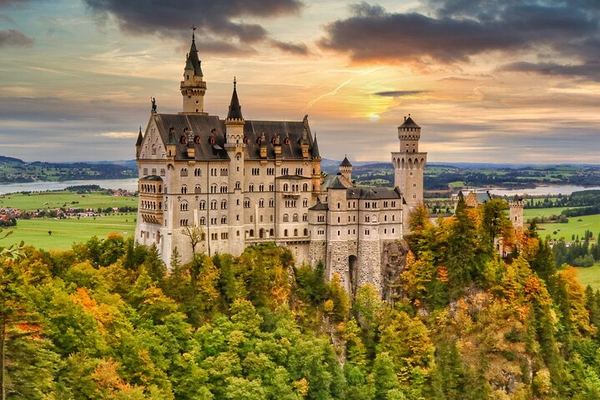
Stop outside if what you want is the picture. The view everybody has seen is taken from the Marienbrücke and from the approach road, both of which cost nothing, and the castle photographs better from a distance than any room in it photographs from the inside, where you are not allowed to photograph at all. Stop outside if the group is slow on hills, if the weather has closed the shuttle, or if you have one afternoon and would rather spend it in a castle whose rooms were furnished for use.
The dissenting view deserves its place too, because it is held by plenty of people who have been: they walked out happy, they thought the painting was worth the climb, and they would go again. Both reactions come from the same thirty minutes. The difference is almost always what the visitor expected to find behind the door, which is the question our dossier on what you actually see inside exists to settle before anyone buys. The listings themselves sit under Neuschwanstein Castle in this catalogue, with what each one includes written out.
Before you book a time slot, know what the slot does
Which bodies sell timed entry, when tickets go on sale, what happens when they sell out, and where there is no slot at all. Monument by monument.
The questions people ask before booking
Is Neuschwanstein worth going inside?
It depends on what you expect to find. The ticket buys a guided tour of about thirty minutes through fourteen decorated rooms, with no private photography, and the administration itself records that the second upper floor was left as a shell. If you want the nineteenth-century painting and the throne room, it is worth the €21. If you want a furnished royal residence, Hohenschwangau across the valley is closer to that, and if you want the famous view, it is free from the Marienbrücke.
How long is the Neuschwanstein castle tour?
About thirty minutes, in German or English with audio guides in nineteen other languages. The visit as a whole is much longer: the ticket centre recommends being in the village 1.5 to 2 hours before your admission time, and the walk up from the ticket centre is roughly 1.5 km of steep road, or 30 to 40 minutes on foot.
Can you take photos inside Neuschwanstein?
No. The administration states that photographing and filming for private purposes are not permitted in the castle. There is no paid photography licence of the kind Prague Castle sells, and no room where it is allowed. Rucksacks, prams and similar bulky objects are also refused at the door.
Neuschwanstein or Hohenschwangau: which should you go inside?
Hohenschwangau was rebuilt between 1833 and 1837 on the remains of the medieval castle, carries more than ninety wall paintings, and was actually lived in by the royal family. Its tour runs about forty-five minutes and involves roughly 180 steps with no lift, and it costs €23.50 against €21. Neuschwanstein is the more famous building and the less complete one. Visitors who want furnished rooms tend to prefer Hohenschwangau; visitors who came for the silhouette get that from outside.
What happens if you are late for your Neuschwanstein time slot?
You do not get in. The administration's wording is that the guided tours start punctually and that in the event of late arrival, participation is no longer possible. The castle sells nothing on site, the counter in the village serves the current day only and is often sold out early, and reservations are generally not possible. There is no later tour to be moved to.
How much does it cost to go inside Neuschwanstein?
€21 for an adult and €20 reduced, free for children under 18 and for students over 18 with a valid student card, plus a €2.50 booking fee when you buy online. That is €23.50 in practice for one adult. The twenty listings tracked in this catalogue run from €60 to €1,400 with a median of €89, and what the difference buys is transport and a guide rather than a different tour.
Tours to the castles above Füssen
What each one includes, and which of the two castles the entry ticket is actually for.
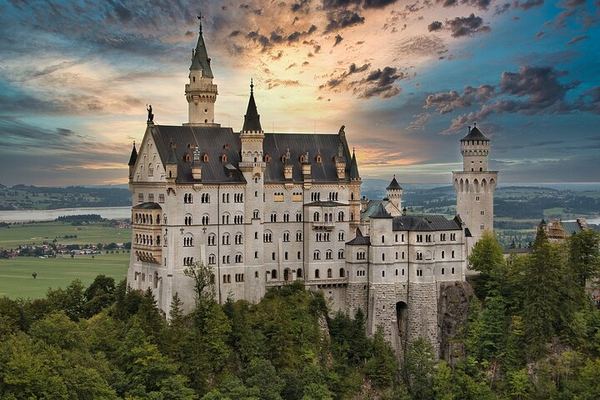
A Driver Rather Than a Guide, and the Pickup Can Be the Airport
Private transport with free time at both castles rather than a guided tour: hotel, address or airport pickup, luggage help, and a driver who waits for you.
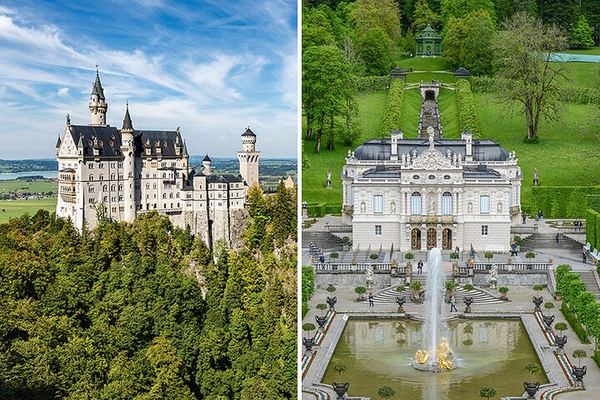
A Main Course and a Drink Are in the Price, and Pickup Can Be Füssen
Lunch at a historic Bavarian restaurant is part of the day, main course and a drink, and the pickup can be Munich, Garmisch-Partenkirchen or Füssen. Sales final.
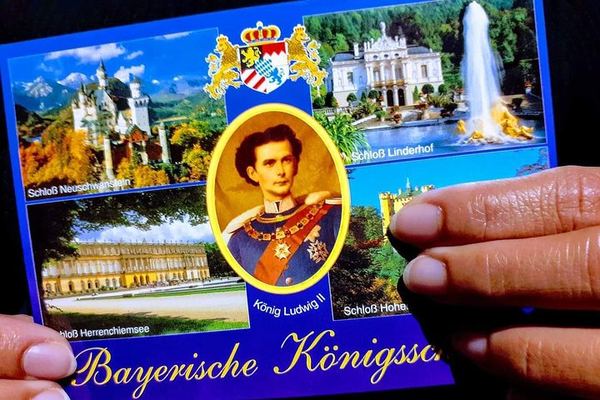
A Neo-Romanesque Face on a High-Tech Castle, and the Floor He Never Finished
Three castles in a day with skip-the-line entry booked even at short notice, and a route out of Neuschwanstein through the unfinished floor and the kitchen.
Book the Castle Tickets Yourself; the Courtyards Cost Nothing
Door-to-door in a premium car with an English-speaking driver. Entry tickets are not included and must be booked online; the courtyards cost nothing.
Ratings collected by Viator and Tripadvisor
Data verified on. Prices and rules read from the Bavarian Palace Administration and the Hohenschwangau ticket centre on 23 September 2026. Catalogue figures from this site's listings.

